
Upholstery cleaning
Upholstery Cleaning Dublin
Fabric-safe cleaning for armchairs, dining chairs, headboards, ottomans and other upholstered furniture, carried out with hot water extraction equipment matched to the fabric in front of us — not a generic surface wash. Looking for a sofa? See our sofa cleaning page.
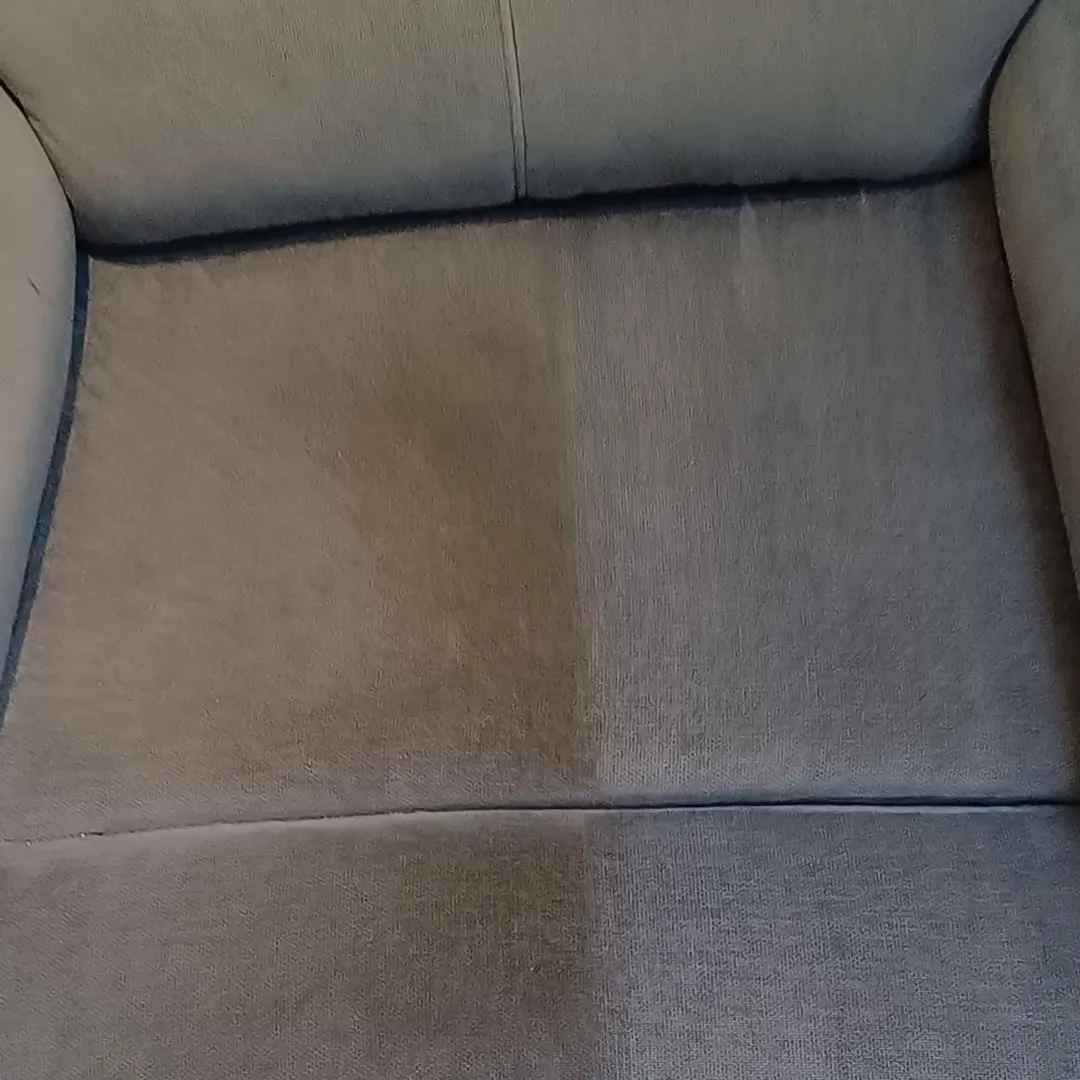
At a glance
- Armchairs, dining chairs, headboards, ottomans and office seating.
- The fabric is identified and tested before cleaning, with low moisture where needed.
- Sofas have their own page: sofa cleaning.
- Booked on its own or in the same visit as carpets and mattresses.
What's included
Upholstery cleaning for every chair, headboard and seat
Whether it's a single armchair that's gone dull, a set of dining chairs, an upholstered headboard or a full living and dining room, it's the same visit and the same equipment, and the sofa can be done at the same time. We typically cover:
Sofas & couches
Fabric sofas, corner suites and sofa beds, covered in detail on our sofa cleaning page.
Armchairs & recliners
Single armchairs, recliners and footstools, cleaned to match the rest of a suite or on their own.
Dining chairs
Fabric-seated dining chairs, often the first thing to show marks and everyday wear.
Other upholstered furniture
Headboards, ottomans and other upholstered pieces — ask if you're not sure whether something qualifies.
Method
A fabric-safe approach to upholstery cleaning
Upholstery fabric varies a lot more than carpet does, and it's not something we treat as one-size-fits-all. Before we start any upholstery cleaning or sofa cleaning job, we look at the fabric itself — natural fibres like cotton, linen and wool behave differently under water and heat than synthetic weaves like polyester or velvet-effect microfibre. Some fabrics handle hot water extraction well; others need a lighter touch, less moisture, or a different process entirely.
That's why fabric testing matters. We check for colourfastness and how the material reacts in a small, hidden area before cleaning the whole piece — it's a basic step, but it's the one that prevents shrinkage, colour bleed or a fabric that dries stiff. On suites with mixed fabrics (a linen sofa with velvet scatter cushions, for example), each part gets treated according to what it actually is, not a single default setting.
The clean itself uses hot water extraction: cleaning solution and hot water are worked into the fabric and then extracted back out, along with the dirt, dust and oils sitting in the weave. It reaches deeper than a home upholstery attachment or a wipe-down, without soaking the fabric or the fill underneath.
Who it's for
When Dublin homes and businesses book upholstery cleaning
Sofa cleaning tends to get booked for a few recurring reasons: everyday build-up on a light-coloured sofa, a spill or stain that's set in, general freshening up before visitors or a house move, or simply because it's been a long time since the upholstery had a proper clean rather than a vacuum. Households with kids, pets or heavy day-to-day use of the sofa tend to need it more often than a spare room armchair.
It's not only homes — offices, waiting rooms, guesthouses and other Dublin businesses with upholstered seating book the same service, usually scheduled around opening hours so seating is back in use with minimal disruption.
How it works
What to expect from a booking
- 1
Tell us what needs cleaning
Let us know how many sofas, chairs or other pieces need cleaning, and the fabric type if you know it — we'll ask anything else we need to.
- 2
Get a free, no-obligation quote
Pricing depends on the number and size of pieces, fabric, and condition — you'll know the cost before we book a time.
- 3
Fabric check, then cleaning
We test the fabric, then clean with hot water extraction equipment suited to what's in front of us, taking care around trims, buttons and frames.
- 4
Realistic drying time
We'll tell you how long the piece needs before normal use, based on the fabric and the room.
A note on furniture & property type
Dublin homes cover everything from period terraces with older, heavier suites to newer apartments with compact furniture — and offices with commercial-grade seating. Access matters too: a sofa in a third-floor apartment or a tight stairwell in a Victorian terrace can affect timing, so let us know about stairs or narrow access when you get in touch.
What's included
What you get with an upholstery cleaning visit
An upholstery cleaning visit starts with a look at the piece itself — the fabric type, its condition, and any marks or areas that need extra attention. From there we use the cleaning method that suits that fabric, rather than applying the same process to everything. Visible marks are treated where it's realistic to do so; some marks lift fully, others fade, and we'll be upfront if something looks like it may not shift completely. Before we leave, we'll talk you through drying — how long the piece needs, and anything worth doing in the meantime to help it along.
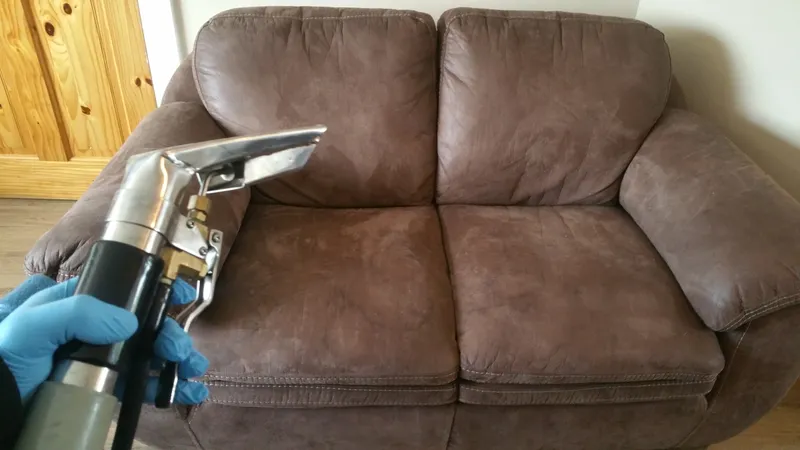
A short clip of an armchair being cleaned with a hot water extraction wand.
What we can clean
Fabric furniture we clean
Fabric Sofas & Corner Suites
Two, three-seater and corner sofas, cushions, arms and frame included, cleaned as a full piece rather than spot by spot. More on our sofa cleaning page.
Armchairs
Single armchairs and recliners, cleaned on their own or matched up alongside a sofa in the same visit.
Dining Chairs (fabric-upholstered)
Fabric-seated dining chairs, often the pieces that pick up marks fastest from everyday food and drink contact.
Footstools & Ottomans
Footstools and ottomans, including storage ottomans with a fabric lid, cleaned to match the rest of a suite.
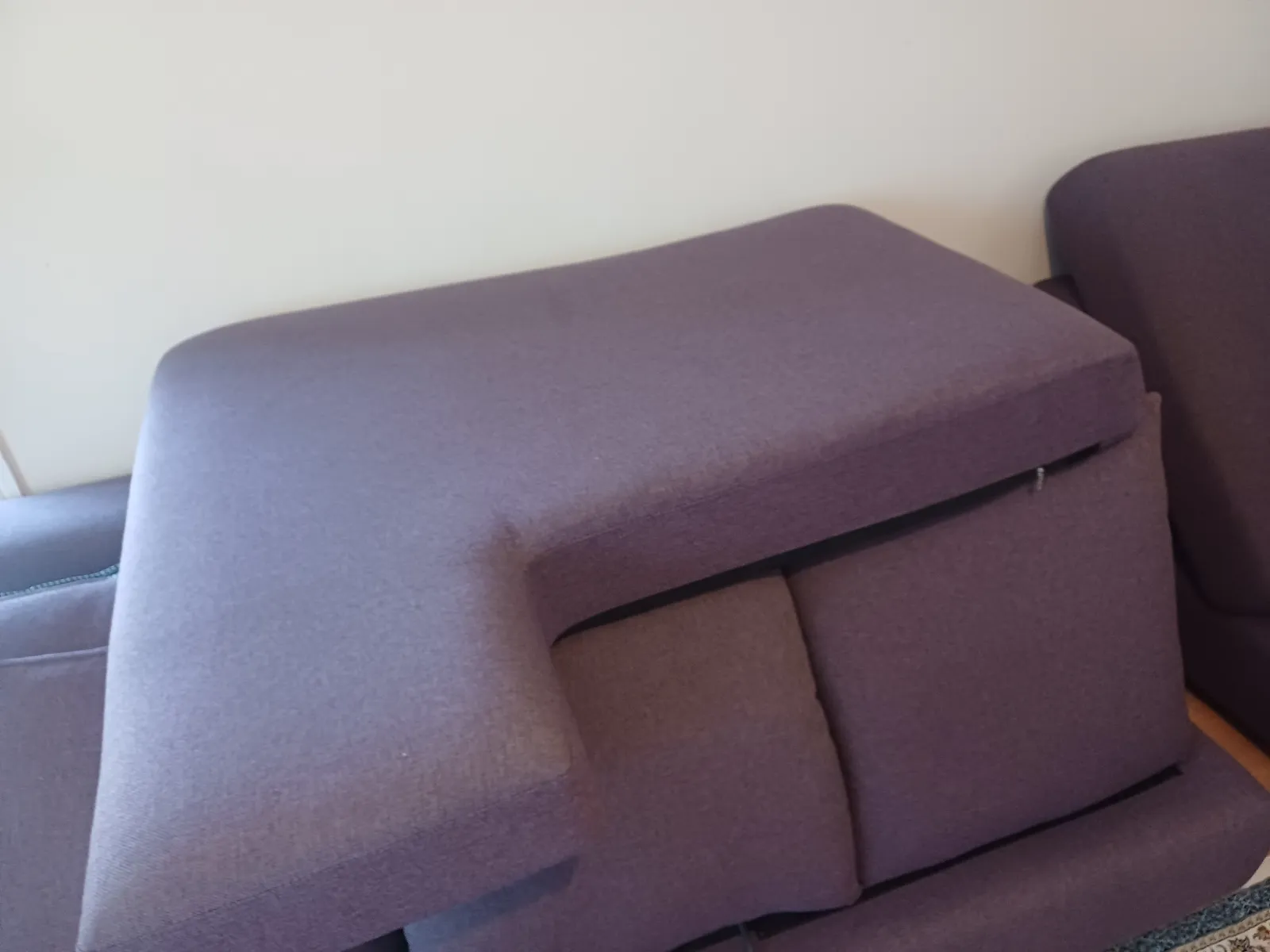
Fabric identification & testing
Why the fabric determines the method
Not every fabric can be cleaned the same way. Before we start, we identify the fabric type and, for anything more sensitive to moisture or cleaning agents, test it in an inconspicuous area first — usually somewhere hidden like the underside of an arm or the back of a cushion. This shows us how the fabric reacts before we commit to cleaning the whole piece.
Some fabrics take hot water extraction well; others need less moisture or a more cautious approach. If a fabric tests poorly, or we're not confident it can be cleaned safely, we'll say so rather than push ahead — it's a judgement made on the day, not a fixed rule applied to every job.
Furniture preparation
Getting ready before we arrive
A little preparation makes the visit quicker and easier for everyone. It helps to clear cushions, throws, small ornaments or anything loose off the sofa or chairs before we arrive, and to move anything fragile out of the immediate area so there's room to work. You don't need to move the furniture itself — we'll work around it in place. If you have pets, it's best to keep them in another room while we clean, and while the furniture is drying afterwards.
Drying after cleaning
What to expect while upholstery dries
Upholstery generally takes longer to dry than carpet, because of the padding and fill underneath the fabric holding onto moisture. Good ventilation helps — open a window or door if you can, and avoid sitting on cushions or the seat itself until they're dry to the touch. If you have pets, it's worth keeping them off the furniture until it's fully dry too, for the same reason. We'll give you a realistic idea of drying time on the day, based on the fabric, the fill and the room itself.
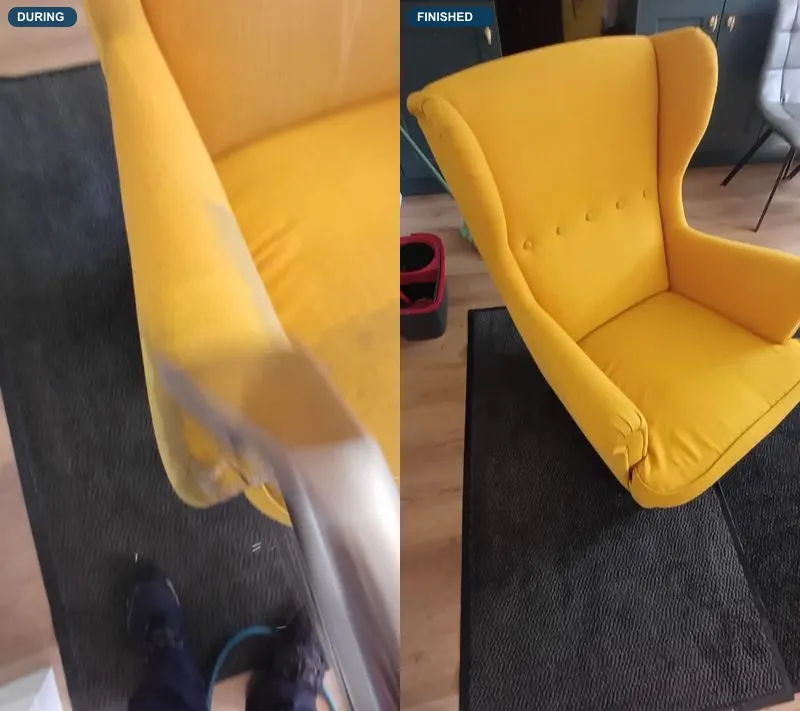
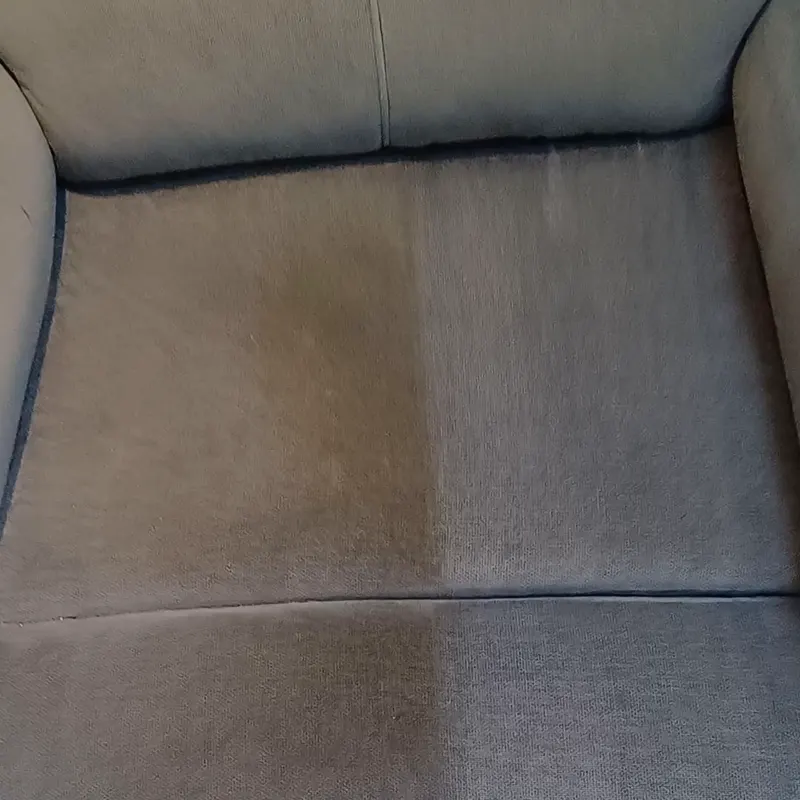
The same armchair mid-clean and finished, 33 minutes apart (Co. Kildare, March 2025). Fabric often looks a shade darker until it's fully dry.
Professional vs DIY
Professional cleaning versus rental machines and sprays
Rental upholstery machines and off-the-shelf fabric sprays can help with light, surface-level marks, and they have their place for a quick freshen-up between proper cleans. What they generally can't do is extract as thoroughly as professional hot water extraction equipment, which works cleaning solution and hot water deep into the fabric and fill and then pulls it back out again, along with the dirt sitting in the weave.
There's also a fabric-safety side to it. Using the wrong product or method on the wrong fabric can cause shrinkage, colour bleed or a stiff, damaged finish — the kind of thing that's hard to undo. Professional cleaning starts with identifying and testing the fabric first, so the method used is one that fabric can actually handle, not a generic product picked off a shelf.
Piece by piece
Upholstery we clean, besides the sofa
Upholstery is everything with fabric over padding, and most of it gets far less attention than the sofa. These are the pieces we clean most. For sofas and couches, see our sofa cleaning page.
Armchairs and wing chairs
Fireside chairs, wing chairs and accent chairs, often the oldest upholstered piece in the house. Arms and headrests are pre-treated first.
Recliners
Manual and electric recliners. We clean the fabric and keep moisture away from the mechanism, the footrest hinge and any wiring.
Dining chairs
Fabric seats and upholstered backs, cleaned as a set so the chairs still match when they're dry.
Upholstered headboards
Fixed to the wall or bolted to the bed, cleaned in place with a low-moisture approach so nothing soaks into the wall or the mattress.
Ottomans, footstools and pouffes
Including storage ottomans with fabric lids. Small pieces, but they collect a surprising amount of grime from feet and shoes.
Office and reception seating
Desk chairs, meeting-room chairs and waiting-room seating, done in batches around your opening hours.
The hardest-working chairs
Dining chairs: why they mark so quickly
Fabric dining chairs sit right where food and drink happen, get pulled in and out by the back every day, and often have pale seats. Spills soak into thin seat padding faster than into a thick sofa cushion, and grease from hands builds up along the top of the backrest.
- Cleaned as a set, so no chair ends up brighter than the others.
- Seats and backs treated separately, because the soiling is different: food on the seat, hand grease on the back.
- Thin padding dries faster than a sofa, so chairs are usually back in use the same day.
- Wooden frames protected, with care at the edges so no water marks the wood.
Headboards
Cleaning an upholstered headboard
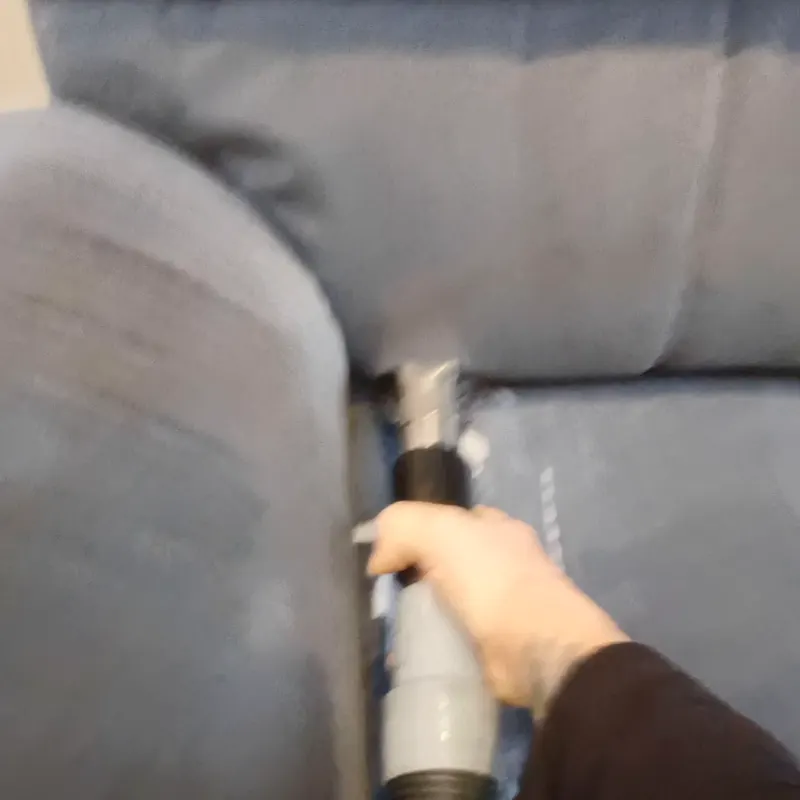
Headboards are one of the most overlooked pieces of upholstery in the house. Every night they pick up hair oils, skin, moisturiser and make-up, and the darker patch where heads rest builds up slowly enough that most people only notice it once it's well established.
Checked and vacuumed first
Dust and hair are vacuumed out of the buttons, piping and seams before anything wet touches the fabric.
Low moisture, cleaned in place
Headboards are cleaned where they are, with less water than a sofa, so nothing soaks through to the wall or the mattress below.
The head area pre-treated
The darker band where heads rest gets its own pre-treatment for oils, the same way a sofa's headrest does.
Often booked with the mattress
If the mattress is due a clean too, both can be done in one visit. See mattress cleaning.
Labels and codes
Check the cleaning code on chairs and headboards
Many armchairs, dining chairs and headboards carry the same manufacturer's cleaning codes as sofas, on a label underneath the seat or on the back. W means water-based cleaning is fine, S means solvent only, W/S means either, and X means vacuum only. The full table, and how we approach each code, is on our sofa cleaning page.
No label is common on older chairs and headboards, and on anything that's been re-covered. That's fine: we identify the fabric and test it in a hidden spot, such as under the seat or on the back of the headboard, before cleaning the whole piece.
Being realistic
What upholstery cleaning can and can't fix
Cleaning lifts soil, oils and most spills. Some problems with chairs and headboards are wear or damage, though, and we'd rather you knew which is which before booking.
Usually improved
- Greasy chair backs and darkened armrests
- Food and drink marks on dining chair seats
- The dark head area on a headboard
- Dust and grime in buttons and piping
- General dullness on office seating
Needs repair, not cleaning
- Crumbling foam in old seat pads
- Broken springs or sagging webbing
- Fabric worn through on armrests
- Sun fading on a headboard by a window
- Tears, burns and loose piping
If a chair would be better re-covered than cleaned, we'll tell you rather than take the job.
Between cleans
Keeping chairs and headboards cleaner for longer
Small habits make a big difference to how quickly upholstered chairs and headboards mark.
Vacuum the buttons and piping
A soft brush attachment once a fortnight stops dust settling into the folds where it's hardest to shift.
Seat pads on busy chairs
Washable seat pads on dining chairs used by small children save the fabric underneath.
Pull chairs by the frame
Pulling dining chairs by the wooden frame rather than the fabric back keeps hand grease off the upholstery.
Pillows in front of headboards
An extra pillow against the headboard takes the hair oils that would otherwise build up in the fabric.
Watch the window
Chairs and headboards in strong sunlight fade unevenly. Blinds during the brightest hours help.
Clean on a schedule
Our guide to how often to clean upholstery covers chairs and headboards as well as sofas.
Step by step
How we clean an armchair
An armchair is a small sofa with more corners. The order matters just as much, and the details take longer than people expect.
Check the label and fabric
The cleaning code, the fabric type and a colour test somewhere hidden, such as under the seat cushion.
Vacuum every crevice
Down the sides of the seat, around buttons and piping, and under the cushion, where grit wears the fabric.
Pre-treat arms and headrest
The darkest areas on most chairs, from hands and hair, get a treatment for body oils first.
Clean panel by panel
Seat, back, arms, sides and outside back, each rinsed and extracted with the upholstery tool so it dries evenly.
Groom and set to dry
The fabric is brushed, the cushion stood on its edge, and you're told when the chair is ready to use.
Fabric by fabric
Fabrics on chairs and headboards
Chairs and headboards often use different fabrics from sofas, chosen for looks more than durability. Each needs its own approach.
Velvet headboards
Popular and easily crushed. Low moisture, and the pile is brushed in one direction as it dries so it doesn't look patchy.
Linen and cotton chairs
Natural fabrics that can shrink or leave water marks, cleaned with less moisture and dried carefully.
Wool and tweed armchairs
Hard-wearing and good at hiding dirt, but sensitive to heat and rubbing. Cooler water and gentle agitation.
Faux suede office chairs
Microfibre that marks easily and needs brushing after cleaning so the nap dries even.
Bouclé accent chairs
Looped fabric that snags if it's brushed hard, so it's cleaned with a softer touch.
Vinyl and faux leather
Wipe-clean surfaces rather than fabric. Extraction isn't the right tool, and peeling is wear, not dirt.
Older pieces
Antique and heirloom chairs
Older chairs can be special for reasons that have nothing to do with price. They can also hide things that make wet cleaning a risk: horsehair stuffing that shrinks, old dyes that run, and fabric that's thinner than it looks.
- We look first. Fabric, stuffing, frame and condition, before deciding anything.
- Minimal moisture where a piece calls for it, or a dry clean of the surface only.
- An honest no if a chair needs a specialist restorer rather than a cleaner.
If a chair has been re-covered in a newer fabric, it's usually much easier to clean than the frame's age suggests.
Rentals and workplaces
Upholstery in lets, holiday homes and offices
Furnished lets
Armchairs, dining chairs and headboards cleaned at the end of a tenancy, alongside the carpets and mattresses.
Holiday homes
Upholstery freshened before the season or between bookings, with drying time planned in.
Offices
Desk chairs, meeting-room chairs and reception sofas, done in batches around opening hours. See commercial cleaning.
Waiting rooms
Seating that takes a lot of different visitors, cleaned so it looks and feels fresh.
Real work
Upholstery cleaning photos from our jobs
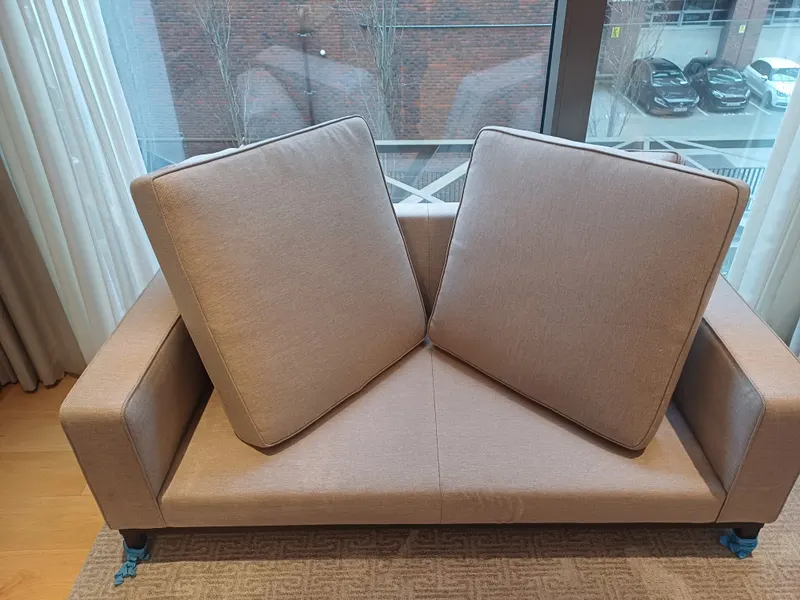
Armchairs and suites photographed during real jobs.
Looking for sofas? See sofa cleaning, or the before and after gallery.
Related services
Often booked alongside upholstery cleaning
Sofa Cleaning
Fabric sofas, corner sofas and sofa beds, cleaned in the same visit as your chairs and headboards.
Sofa cleaning Dublin →Carpet Cleaning
Deep steam and hot water extraction cleaning for fitted carpets, often booked in the same visit as a sofa clean.
Carpet cleaning Dublin →Pet Stain & Odour Removal
Targeted treatment for pet stains and odour worked into upholstery or carpet, not just masked over.
Pet stain removal Dublin →Stain Removal
Targeted treatment for wine, coffee and everyday stains on fabric, as part of a full clean or on its own.
Stain removal Dublin →Rug Cleaning
Careful, fibre-appropriate cleaning for wool, synthetic and specialist rugs, in place or collected.
Rug cleaning Dublin →Areas we cover
Upholstery cleaning across Dublin and Leinster
We cover Dublin city and county, and the rest of Leinster, for upholstery cleaning. Find your area for local details, or get a quote wherever you are.
Reviews
A recent upholstery cleaning job
"Not only did he arrive on time but did a wonderful job on my upholstery, carpets and rugs. He is extremely courteous and friendly and trustworthy. The standard of his work is impeccable. I cannot recommend him highly enough."
Victor WilliamsonRelated guides
More on upholstery care
Get a free quote
Tell us about the job
We'll come back to you with a clear price based on the number of pieces, fabric and condition — no call-out obligation.
Quickest way to an accurate price: send a few photos of the rooms, stairs and any stains, or WhatsApp them to us.
FAQ
Upholstery cleaning questions
Can all fabrics be cleaned?
Most upholstery fabrics can be wet-cleaned safely, but not all. We check the fabric type and test in an inconspicuous spot before starting, and for delicate or unknown fabrics we may recommend a different method or advise against wet cleaning altogether.
Do you clean leather sofas the same way as fabric ones?
Genuine leather isn't cleaned the same way as fabric — it needs conditioning and leather-specific care rather than hot water extraction, so it's not something we offer as standard. If you're not sure whether your sofa is genuine leather, faux leather or a leather-look fabric, send us a few details or a photo and we'll tell you honestly whether we can help.
Do you test for colour bleeding before cleaning my sofa?
Yes — before cleaning any piece, we test an inconspicuous area, usually somewhere hidden like the back of a cushion or the underside of an arm, to check the fabric holds its colour and reacts well to hot water extraction. It's a standard step on every job, not something we skip to save time.
Does it matter if my cushion covers are removable or fixed?
It affects how thoroughly we can clean them. Loose covers with zips can sometimes be treated more thoroughly, occasionally on their own, while fixed or non-removable covers are cleaned in place along with the rest of the piece. Either way we test the fabric first and clean it as part of the same visit — just let us know if you're unsure which type you have.
Do you clean dining chairs and other furniture, not just sofas?
Yes — armchairs, dining chairs, footstools and other upholstered furniture can all be included alongside your sofa, or booked on their own.
Dining chairs seem to get marked quickly — is that normal?
Yes, fabric-seated dining chairs are often the first piece of upholstery to show marks, since they're close to food and drink and get more day-to-day contact than a sofa. They can be cleaned on their own or alongside other pieces, and it's common for households to book them more often than a sofa for that reason.
Do you clean office or reception seating?
Yes — offices, waiting rooms and other Dublin businesses with upholstered seating book the same service we offer for homes, usually scheduled around opening hours so seating is back in use with as little disruption as possible.
How often should a heavily used family sofa be cleaned compared to a guest room chair?
It depends on use. A sofa that sees daily use from kids, pets or general family life will show build-up faster than an armchair in a spare room that's rarely sat on, so the family sofa usually benefits from cleaning more often — every six to twelve months is a reasonable guide for busy households, with guest furniture able to go longer between cleans.
Will it remove pet hair or odour from my sofa?
Cleaning lifts embedded dirt and helps with everyday odours, and pet hair is removed as part of the process. For stronger pet odours or stains soaked into the fill, see our pet stain removal service for a more targeted treatment.
How long does upholstery take to dry?
Drying time depends on the fabric, fill and ventilation in the room, but most sofas and chairs are dry within several hours. We use extraction equipment that removes as much moisture as possible during the clean, and we'll give you a realistic estimate on the day.
Do you clean curtains or other soft furnishings?
Curtains and other soft furnishings aren't part of our standard upholstery service. If you've got something specific in mind alongside a sofa or chair booking, mention it when you get in touch and we'll let you know honestly whether it's something we can take on.
How do you know which cleaning method is safe for my sofa's fabric?
We start by identifying the fabric type and testing it in an inconspicuous area, such as the back of a cushion or underside of an arm, before any cleaning begins. This tells us how the fabric responds to moisture and cleaning solution, and lets us choose hot water extraction or a lighter, more cautious approach depending on what we find. If a fabric seems too sensitive to clean safely, we'll tell you honestly rather than risk it.
Do I need to move cushions or furniture before you arrive?
It helps if you clear any small items, throws or ornaments off the sofa or chairs before we arrive, and move anything fragile out of the immediate area. You don't need to move the furniture itself — we'll work around it — and it's a good idea to keep pets in another room while we clean and while the furniture is drying.
Can you clean an upholstered headboard without taking it off the wall?
Yes. Headboards are cleaned in place with a low-moisture approach, so nothing soaks into the wall or the mattress. Pulling the bed out a little gives us room to work.
Can you clean an electric recliner?
Yes. We clean the fabric and keep moisture away from the motor, the mechanism and any wiring. Please unplug the chair before we arrive and leave it in the upright position.
How long do dining chairs take to dry after cleaning?
Usually less time than a sofa, because the seat padding is thinner. Most dining chairs are ready to use later the same day, depending on the fabric and how well the room is ventilated.
Is it worth cleaning an old armchair, or should it be re-covered?
If the fabric is sound and the chair is just dirty, cleaning usually brings it back well. If the fabric is worn through, the foam is crumbling or the springs have gone, that's repair work, and we'll say so honestly rather than clean it anyway.
Do you clean upholstered stools and bar stools?
Yes, as long as the seat is fabric. Kitchen stools and bar stools are cleaned the same way as dining chairs, in a batch, with care around the frames.
How much does upholstery cleaning cost?
It depends on the number of pieces, their size, the fabric and how soiled they are. A set of dining chairs is priced differently from a single armchair or a headboard. Send a photo of each piece and we'll give you a clear price before anything is booked.
Can you clean a buttoned headboard?
Yes. Dust and hair are vacuumed out of the buttons and folds first, then the fabric is cleaned with low moisture, panel by panel, with extra care around the buttons.
Can you clean fixed bench seating and window seats?
Most fixed fabric seating can be cleaned in place, including kitchen benches and window-seat cushions. Send a photo so we can check the fabric and access before we come.
Do you clean office chairs with mesh backs?
Yes. Mesh backs are cleaned lightly so they don't stretch, and the fabric seats are cleaned like any other upholstery. Office chairs are usually done in batches.
Can make-up be cleaned off a fabric headboard?
Usually it can be lightened a lot. Foundation and mascara are oily, so they're pre-treated before cleaning. Strong pigments on light fabric can leave a faint trace.
Is upholstery cleaning safe for antique chairs?
Sometimes, with care. Old stuffing, fragile fabric and old dyes can all make wet cleaning risky. We'll look first, and if a chair needs a specialist restorer, we'll tell you rather than risk it.
How often should fabric dining chairs be cleaned?
More often than the sofa, especially with young children at the table. Many families have them done whenever the carpets are cleaned. See how often to clean upholstery.