
Blog · 14 September 2026
Berber and loop-pile carpet: why snagging is a real risk during cleaning
Berber and other loop-pile carpets are popular for good reason — they wear well, hide footprints, and shrug off general foot traffic better than most cut-pile carpets. But that same looped construction makes them genuinely more vulnerable to a specific kind of damage: a snagged loop that pulls and unravels. Here's what actually causes it, and why it changes how the carpet should be cleaned.
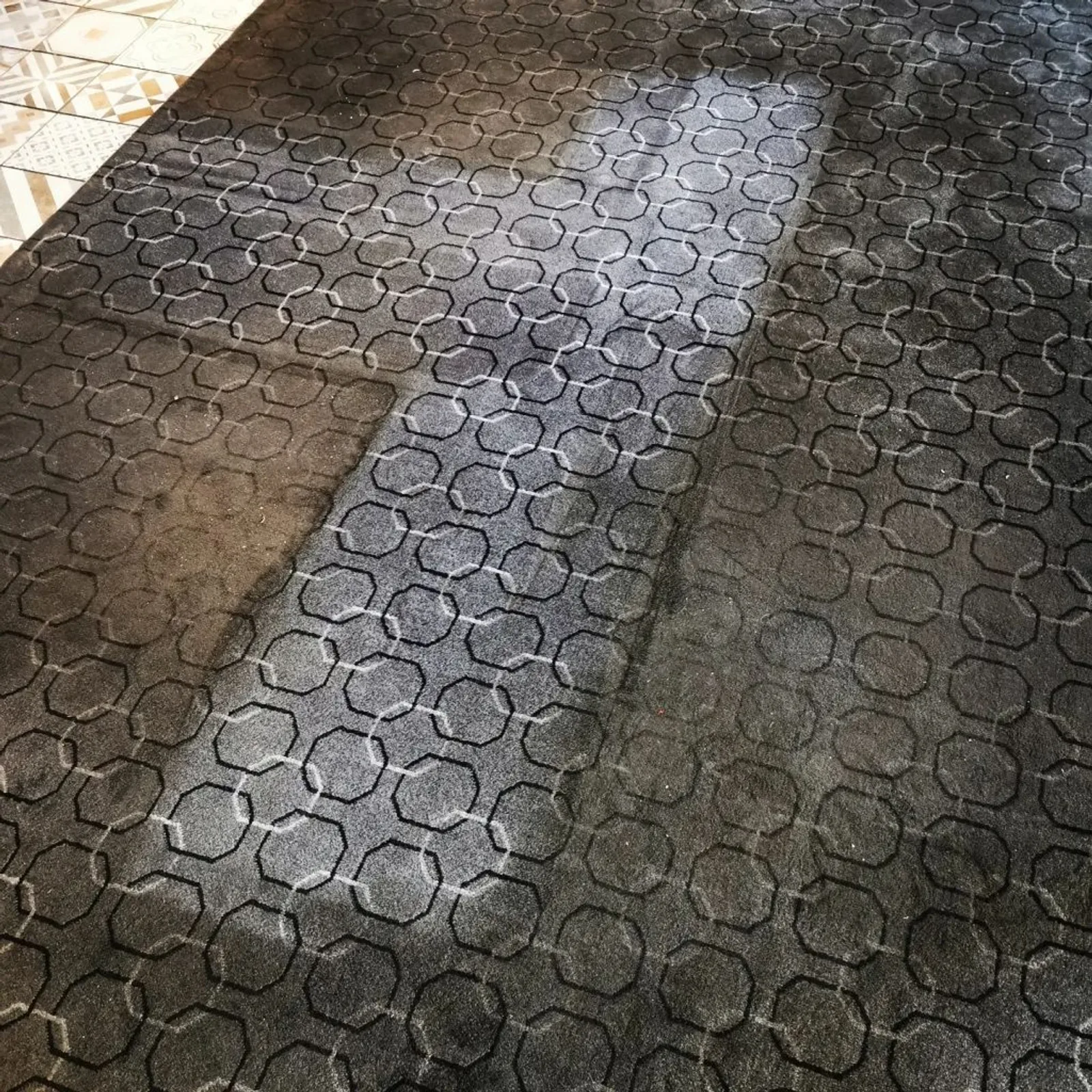
What actually makes loop-pile carpet different
Most carpet starts life the same way: yarn is tufted through a backing material in loops. What happens next is what splits carpet into its main families. Cut-pile carpet has those loops sheared off, leaving individual upright tufts — that's the soft, plush finish most people picture as "normal" carpet. Berber and other loop-pile carpets skip that step and leave the loops intact, which produces a denser, more textured, lower-profile surface. Genuine Berber traditionally refers to a flecked, undyed-look wool or wool-blend loop carpet, though the name gets used loosely today for looped carpet in general, including synthetic versions.
That intact loop is exactly why loop-pile carpet resists crushing and matting so well in high-traffic areas — there's no upright tuft to flatten or bend over. It also tends to hide vacuum lines, dents from furniture, and general soiling better than cut pile. The trade-off is structural: each loop is only anchored to the backing at two points, rather than existing as a single free-standing strand the way a cut tuft does.
Why a single snag can turn into a real problem
In a cut-pile carpet, catching one tuft on something sharp usually just pulls that one strand loose — annoying, but contained. Loop-pile carpet behaves differently. Because the yarn runs as a continuous loop rather than ending at a cut point, catching one loop can pull the connected run of yarn along with it, sometimes unravelling several loops in a row before it stops. Carpet fitters sometimes call this "zippering," and it's the reason a small snag on a loop-pile carpet can visibly grow if it isn't dealt with, where the same catch on cut pile usually wouldn't spread at all.
The things that cause it are ordinary household hazards rather than anything exotic: a cat or dog's claws catching and pulling as they walk or scratch, a chair or table leg dragged rather than lifted, a loose thread from clothing or a rug fringe getting stepped on and pulled, or — very commonly — the wrong vacuum settings.
Why vacuuming and cleaning technique matter more here
A rotating brush bar, the kind built into most upright vacuums to lift deep dirt from cut pile, is one of the most common causes of avoidable loop damage. On a cut-pile carpet, that agitation is doing its job. On a loop-pile carpet, a spinning brush head dropped low can catch and stretch the loops with every pass, gradually working them loose even without a single obvious "snag" moment. The safer approach for everyday vacuuming is suction-only, or a brush height set high enough that it isn't biting into the loops.
The same logic carries over into professional cleaning. Aggressive rotary or counter-rotating brush machines, and high water pressure, are more likely to catch and stretch loops than a straightforward wand-based hot water extraction pass. A gentler approach — lower pressure, slow and overlapping passes, and any manual pre-treatment agitation done by hand rather than a spinning brush — gets the same depth of clean without putting the loop structure under unnecessary strain. It's a good example of why "professional carpet cleaning" isn't one fixed process: the right method changes with the carpet in front of you, not just the level of soiling.
Pets, older loop-pile carpet, and realistic expectations
Loop-pile carpet and clawed pets are a genuinely common combination in Dublin homes — plenty of houses across the city and further out, from tighter terraces to more rural stretches like Ballyboughal, have a dog or cat and a Berber-style carpet in the hallway or stairs, often because it was chosen specifically for durability. That's not a bad pairing, but it's worth going in with the trade-off understood rather than assumed away: the same tight weave that resists general wear doesn't resist a claw catching a loop the way it resists a shoe scuffing across the surface. Carpet that's already a few years old and has a few loose or pulled loops is also more prone to a small snag spreading further during any deep clean, simply because the yarn is already under more tension at those points.
What to do if a loop has already snagged
A single pulled loop on its own is rarely a reason to panic. The safest fix is usually to trim the loose loop flush with the surrounding pile using sharp scissors rather than pulling on it, which risks unravelling more of the row. Trying to tuck a loop back down into the backing can work for a very minor snag but often doesn't hold. For anything beyond one or two isolated loops, or a run that's already started to spread, it's worth getting it looked at before a scheduled clean rather than after — agitation and moisture on an already-loosened section of carpet is exactly when a small problem tends to become a visible one.
We check fibre and pile type before deciding how to agitate and clean any carpet, loop-pile included, as part of our carpet cleaning service across Dublin, Kildare and Wicklow. If you're weighing up whether a carpet needs a professional visit at all right now, our professional vs DIY cleaning guide covers that decision in more depth, or get a free quote for your own carpet.
FAQ
Common questions about Berber and loop-pile carpet
What's actually different about Berber carpet compared to cut pile?
Cut pile carpet has its yarn loops sheared off to make individual upright tufts, which is what most people picture as a typical soft carpet. Berber and other loop-pile carpets leave the yarn looped and uncut, which creates a denser, more textured surface that resists crushing and hides footprints and vacuum marks well — but each loop is only anchored at two points in the backing, rather than standing as a single cut strand.
Why does loop-pile carpet snag so much more easily than other types?
Because the yarn runs in a continuous loop rather than ending as a cut tuft, catching one loop on something sharp — a claw, a chair castor, an aggressive vacuum brush — can pull that loop and the connected run of yarn along with it, sometimes unravelling several loops in a row. A cut-pile carpet loses one tuft in the same situation; a loop-pile carpet can lose a visible row.
Can Berber or loop-pile carpet be professionally cleaned without damaging it?
Yes, but the approach has to change. Rotating brush heads and beater-bar agitation are the main cause of avoidable loop damage, so a wand-based hot water extraction with gentle, overlapping passes and lower pressure is the safer method, with any pre-treatment agitation done by hand rather than a spinning brush.
Is loop-pile carpet a bad choice for homes with pets?
Not necessarily a bad choice, but it's a real trade-off worth knowing before you fit it. The tight loops resist general wear and hide dirt well, which suits a busy household, but a cat or dog's claws can catch and pull a loop in a way they generally can't with cut pile, so households with clawed pets should go in aware of that risk rather than being surprised by it later.