Sofa cleaning
Sofa Cleaning Dublin
Fabric sofas, corner sofas, sofa beds and couches cleaned in your home with hot water extraction, after a fabric test. Arms, headrests, cushions and the bits underneath, not just a wipe over the top.
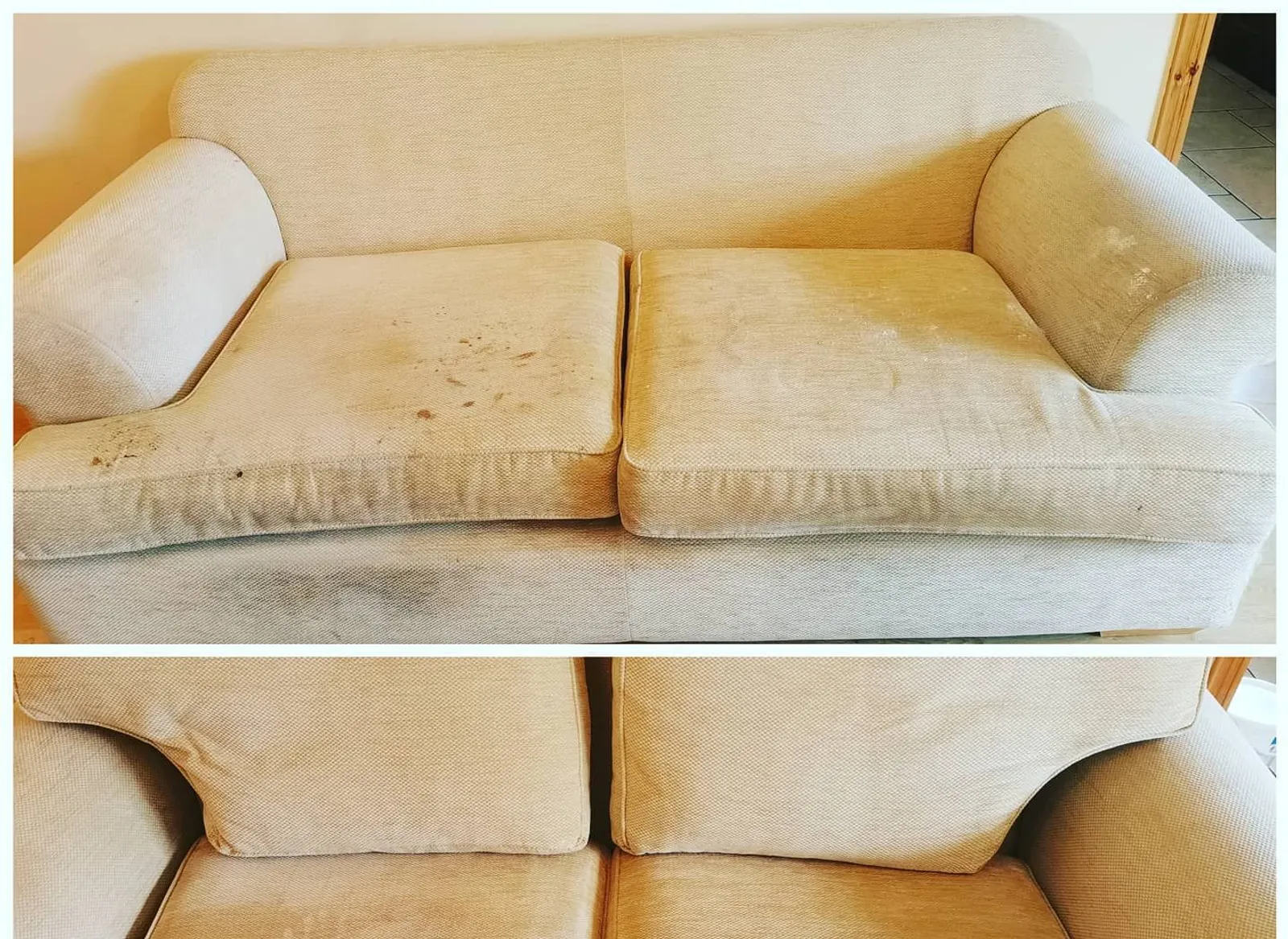
A cream two-seater from one of our jobs: before (top) and after cleaning (bottom).
At a glance
- Fabric sofas, corner sofas, sofa beds and recliners, cleaned in your home.
- The cleaning code and colour are checked first. Leather isn't part of our standard service.
- Arms, headrests, cushions and the deck underneath, not just the seats.
- Most fabric sofas are dry within several hours.
What's included
What a sofa clean actually covers
A proper sofa clean is more than a pass over the seat cushions. Every visit covers the whole piece, because the dirt on a sofa is rarely where you expect it.
- Seat and back cushions, cleaned on the faces you sit and lean on, and turned where the cushion allows.
- Arms and headrests, pre-treated for the body oils that darken them before the main clean.
- Under the cushions: crumbs, grit and pet hair vacuumed out of the seams and the deck underneath.
- The frame fabric on the front, sides and back, not just the parts you sit on.
- Scatter cushions and footstools, if you'd like them included.
- Marks and spills spot-treated as far as the fabric safely allows.
- Grooming and drying: the fabric brushed to dry evenly, cushions set up for air, and a realistic drying time.
Every shape and size
Sofas and couches we clean
If it's fabric and it's a sofa, we can almost certainly clean it. Size and design change how long the job takes, not whether we can do it.
Two- and three-seaters
The everyday living-room sofa, with fixed or loose cushions, cleaned as a whole piece rather than spot by spot.
Corner and modular sofas
L-shaped and modular sofas, chaise ends included. Each section is cleaned in turn, so it matches when it's dry.
Sofa beds
The sofa itself, and the fold-out mattress too if you'd like it done. Handy before guests arrive.
Recliner sofas
Manual and electric recliners. We clean the fabric and keep moisture well away from the mechanism and wiring.
Buttoned and Chesterfield-style
Deep-buttoned fabric sofas collect dust in every fold. They take longer, and the buttons and trims get extra care.
Leather sofas
Genuine leather needs leather-specific care rather than hot water extraction, so it isn't part of our standard service. Send a photo and we'll tell you honestly.
Our method
How we clean a sofa, step by step
The same careful order on every sofa, so the fabric gets the clean it can take and nothing is left to guesswork.
Label and fabric check
We look for the cleaning code, identify the fabric, and test the colour in a hidden spot like the back of a cushion.
Cushions off, vacuum first
Cushions come off and the seams, deck and crevices are vacuumed, because grit left behind turns to mud when it's wet.
Pre-treat the worst areas
Arms, headrests, seat fronts and any spills get a pre-treatment matched to the soil: oils, food, drink or everyday dirt.
Hot water extraction
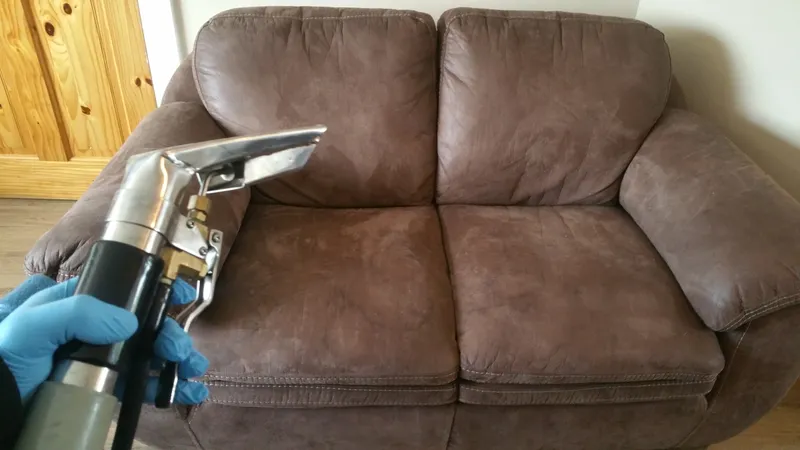
An upholstery tool rinses the fabric and draws the water, soil and cleaning solution straight back out.
Groom and set to dry
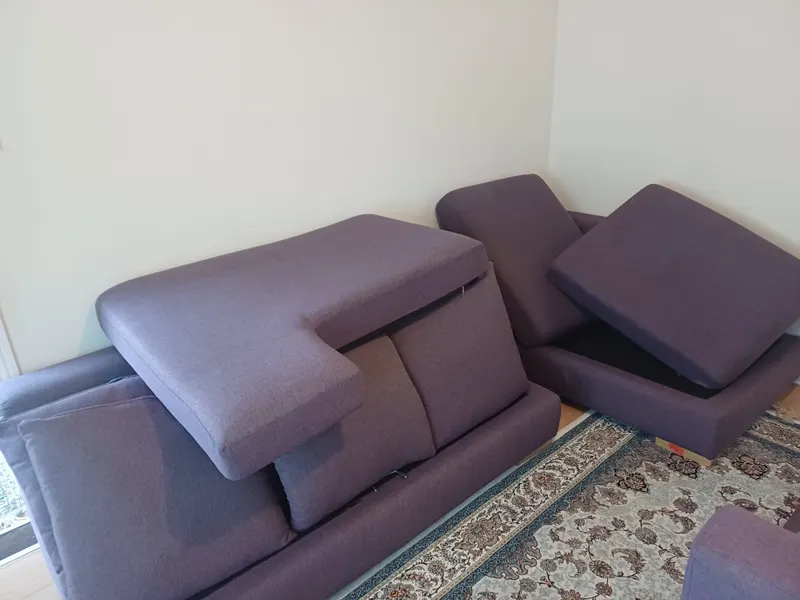
The fabric is brushed so the pile dries evenly, and loose cushions are stood on their edges so air reaches both sides.
Drying advice
You get a realistic drying time for that fabric and room, and what to do to speed it up.
Read the label first
Sofa cleaning codes, and what each one means
Many sofas carry a cleaning code from the manufacturer, usually on a label under a seat cushion or on the base. It's the quickest way to know what a fabric will tolerate, and it's the first thing we look for. No label is common too, especially on older or second-hand sofas, and that's fine: we identify the fabric and test it instead.
| Code | What it means | How we approach it |
|---|---|---|
| W | Water-based cleaning is suitable | The usual candidate for hot water extraction, after a colour test in a hidden spot. |
| S | Solvent cleaning only, no water | Water-based cleaning isn't recommended. We'll look at the sofa and tell you honestly whether we can help. |
| W/S or SW | Either water or solvent cleaning | A test decides how much moisture the fabric gets and which approach is gentlest. |
| X | Vacuum or light brushing only | No liquid cleaning. We'd advise against wet cleaning rather than risk the fabric. |
| No label | Unknown, common on older sofas | We identify the fabric by look and feel, then test before cleaning the whole sofa. |
If you can find the label before you get in touch, a photo of it with your quote request saves a step. It also tells you something useful for spills: on an S or X coded sofa, even water from a well-meaning dab can leave a ring.
Fabric by fabric
Common sofa fabrics, and how each is handled
Most sofas in Irish homes fall into a handful of fabric types. Each one reacts differently to water, heat and brushing, which is why we don't clean them all the same way.
Cotton & linen
Natural fibres that can shrink or brown if they're over-wetted. They get a lower-moisture clean and careful drying, and older pieces are always tested first.
Polyester & microfibre
The fabric on most modern sofas. Many are fine with water-based cleaning, but some microfibres carry an S code, so the label and a test decide. Brushed afterwards so it dries evenly.
Velvet & chenille
Pile fabrics that show every brush stroke. The pile is groomed in one direction as it dries, and light shading afterwards is normal for velvet.
Wool & wool blends
Hard-wearing and naturally good at hiding soil, but too much heat or rubbing can make wool felt or shrink. Cooler, gentler cleaning.
Viscose, rayon & silk blends
Weakest when wet and prone to water rings, browning and texture change. Often coded S. Sometimes the honest answer is that wet cleaning isn't worth the risk.
Bouclé & textured weaves
Looped and nubbly fabrics that can snag or pull. No aggressive brushing, and extra care around seams and buttons.
Faux leather
A wipe-clean surface rather than a fabric, so extraction isn't the right tool. Cleaning can't fix peeling or cracking, which is the coating breaking down. See leather vs fabric care.
Where the dirt goes
Where a sofa shows dirt first
A sofa rarely gets dirty evenly. These are the spots that darken first, and the ones we pre-treat before the main clean.
Armrests
Hands, elbows and the odd cup of tea. Body oils build up into a dark, slightly shiny patch that's usually the most visible part of a dirty sofa.
The headrest line
A darker band along the top of the back cushions where heads rest, from hair products and skin oils. It comes up well with the right pre-treatment.
The front edge of the seats
Where legs, jeans and shoes rub. Dye from new denim can transfer onto light fabric here too.
Seams and crevices
Crumbs, grit and pet hair collect down the sides and under the seat cushions, which is why we lift the cushions and clean underneath.
The pet's favourite spot
Usually one end of the sofa or a particular cushion. Hair, oils and the occasional accident. Odour in the fill is covered on our pet stain and odour page.
The TV-dinner seat
Every sofa has one: the seat where food and drinks happen. Spills there soak into the cushion foam if they're not caught quickly.
Being realistic
What sofa cleaning can and can't fix
A professional clean makes a big difference to most sofas. Some problems aren't dirt, though, and we'd rather you knew that before booking than after.
Usually improved
- Darkened armrests and headrest lines
- Food and drink spills, especially recent ones
- General dullness and grey soiling
- Pet hair and everyday odours
- Sticky residue from wipes and fabric sprays
- Crumbs and grit in the seams
Not fixed by cleaning
- Sun fading and other colour loss
- Worn, pilled or thinning fabric
- Sagging cushions and flattened foam
- Rips, burns and pulled threads
- Peeling or cracking faux leather
- Dye transfer from jeans, in some fabrics
If a mark is borderline, we'll say so on the day and treat it as far as the fabric safely allows. Old water rings and marks left by a previous DIY attempt often improve, but they're judged case by case.
Getting an accurate price
Corner sofas, sofa beds, recliners: what to tell us
A quick description of the sofa gets you a firm quote without a visit. These are the details that change the job.
| Sofa | Worth mentioning when you ask for a quote |
|---|---|
| Two- or three-seater | Fixed or loose cushions, and how many scatter cushions you'd like included |
| Corner sofa | How many sections, and whether there's a chaise end or a matching footstool |
| Sofa bed | Whether you'd like the fold-out mattress cleaned as well as the sofa |
| Recliner sofa | Manual or electric, and how many reclining seats |
| Buttoned sofa | Deep buttoning takes longer, so a close-up photo of the back helps |
| Matching armchairs | How many, so the whole suite can be done in the same visit |
Photos do most of this for you: one of the whole sofa, one close-up of the fabric, one of the label if there is one, and one of any stains. Send them through the photo quote form or on WhatsApp.
Spill first aid
If something spills on your sofa
What happens in the first few minutes decides most sofa stains. These steps help, and none of them make our job harder later.
Blot, don't rub
Press white kitchen paper or a clean cloth onto the spill to soak it up. Rubbing pushes it into the fill and frays the fabric.
Check the code
Look at the label before using any water or product. On S or X coded fabric, stop at blotting and get in touch.
Test anything first
If you do use a product, try it somewhere hidden, like the back of a cushion, and wait for it to dry before going near the stain.
Damp, never soaked
On water-safe fabric, dab with a little cold water and blot again. Too much water sinks into the cushion and leaves a ring as it dries.
Keep heat away
No hair dryer, iron or radiator. Heat can set protein and sugar stains and shrink natural fibres.
Stop if you're unsure
A fresh, untouched stain is much easier for us than one that's been scrubbed with three products. A photo on WhatsApp is enough to ask.
Specific stains: coffee and tea, ink and biro on fabric sofas, grease and oil, and our stain removal service for marks that won't shift.
After the clean
Drying a sofa: what to expect
Hot water extraction leaves a sofa damp rather than wet, and most fabric sofas are dry within several hours. Thick seat cushions and dense fabrics take longest, and a cold, still room slows everything down.
- Let air move. Open a window if the weather allows and leave the room door open.
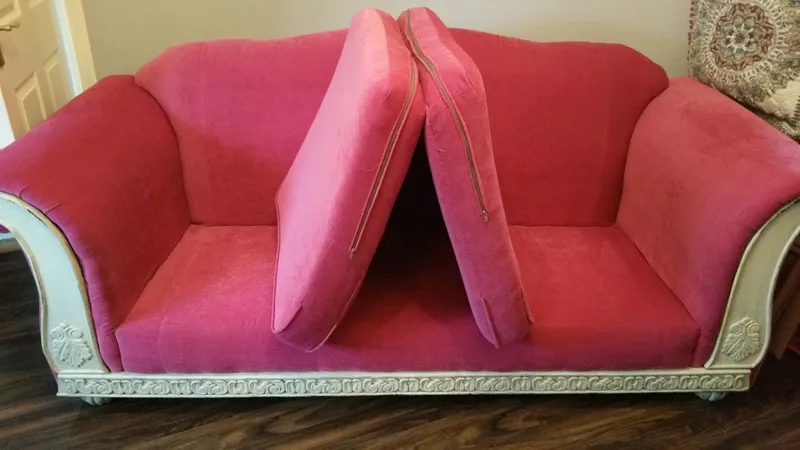
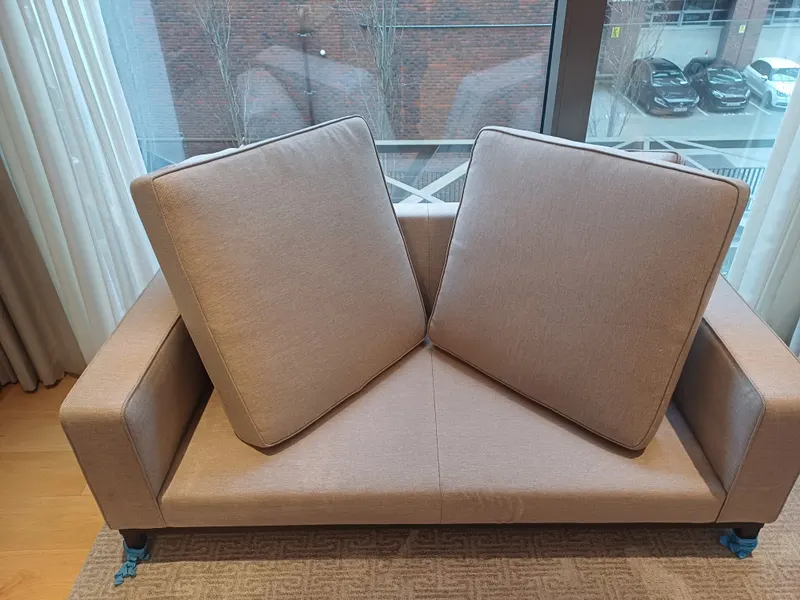
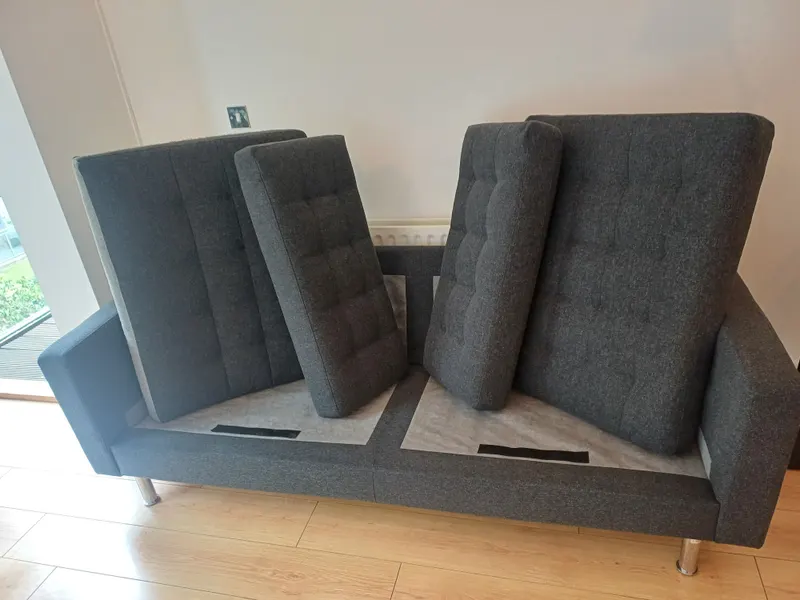
- Cushions on their edges, as on this two-seater, so air reaches both sides.
- Gentle heat only. Background heating helps; a heater aimed at the sofa doesn't.
- Pets off until it's dry, so paws don't leave marks in damp fabric.
- A shade darker while damp is normal. The colour evens out as the fabric dries.
Real work
Sofa and upholstery cleaning photos from our jobs
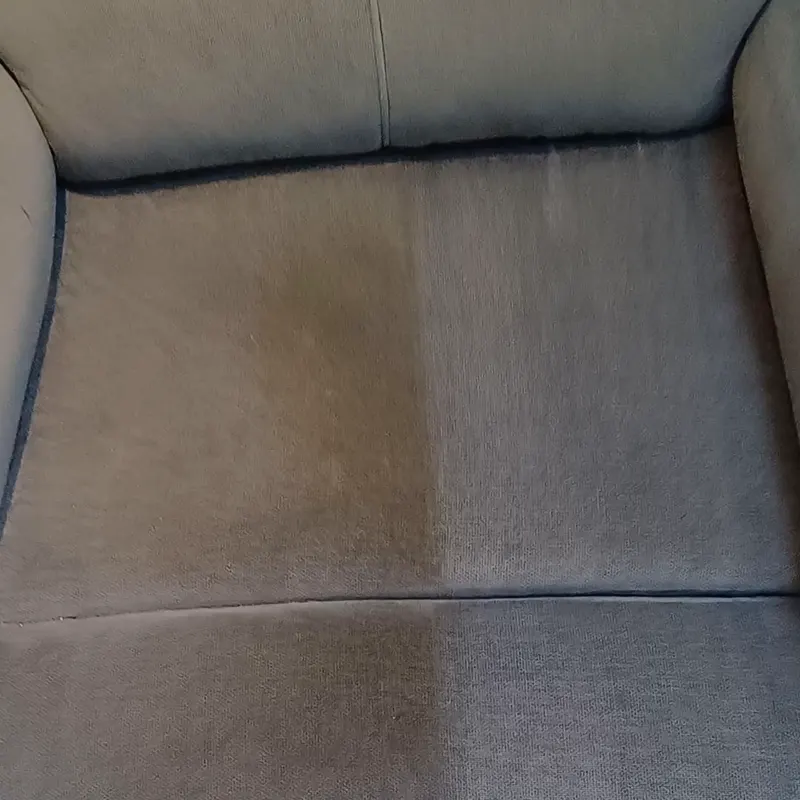
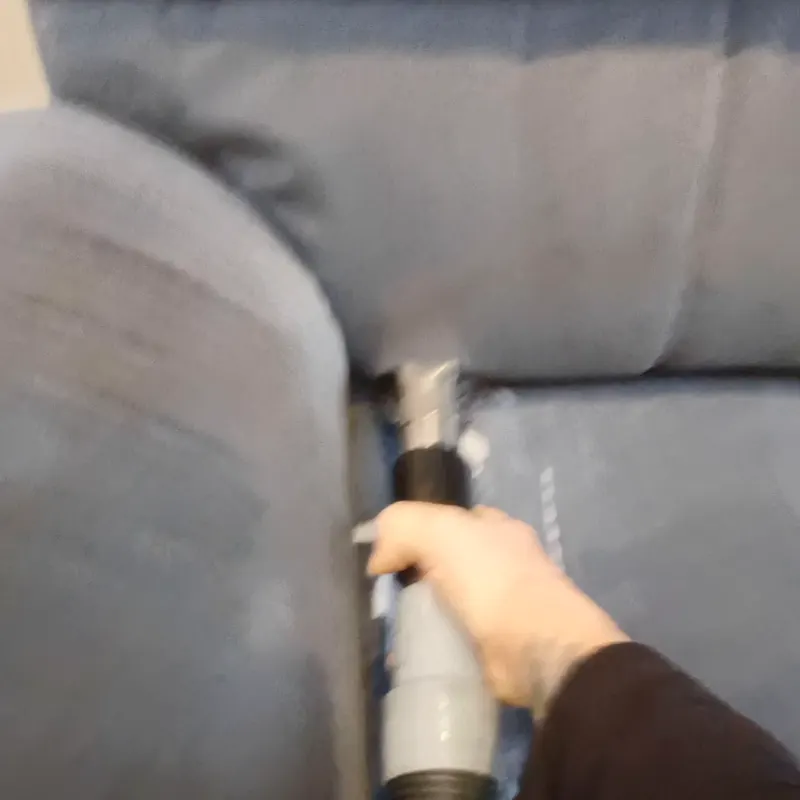
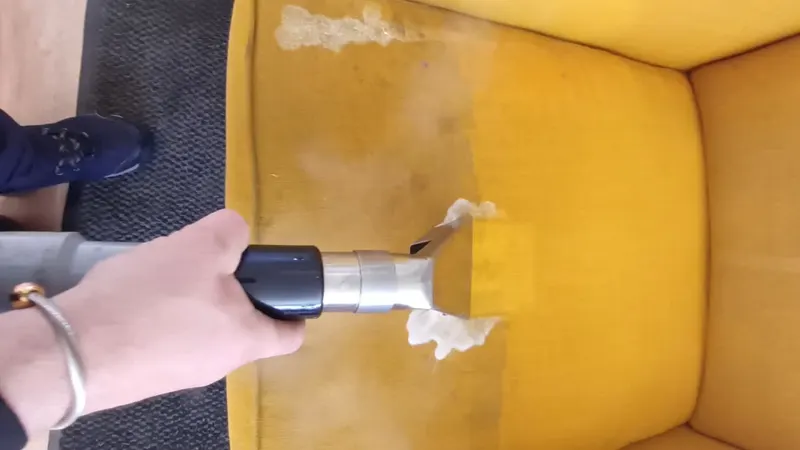
Real photos from our own sofa and chair jobs: cushions set up to dry, and the difference one pass makes on a fabric back cushion.
Between cleans
Keeping a sofa cleaner for longer
A professional clean resets a sofa. A few habits decide how long it stays that way, and none of them take more than a few minutes a week.
Vacuum weekly
Use the upholstery tool, including the seams and under the seat cushions, where grit wears the fabric from below.
Turn and swap cushions
Loose cushions that are turned and swapped wear and fade evenly instead of forming a favourite dip.
Throws on the hot spots
A washable throw on the arms, the headrest or the pet's end is far easier to wash than the sofa.
Mind the sun and radiators
Strong sunlight fades fabric and radiators dry it out. A few feet of space makes a difference over the years.
Skip the wipes and sprays
Many household products leave a sticky residue that attracts dirt, or a ring that's hard to shift later.
Clean before it's bad
Sofas cleaned regularly come up better than ones left for years. See how often to clean a sofa.
Homes with pets
Sofa cleaning when there's a dog or cat in the house
Pets love sofas, and sofas show it: hair woven into the fabric, oily patches where a dog lies, and sometimes an accident that soaks into the cushion foam. Hair and everyday pet odour come out as part of a normal sofa clean.
Urine is different. Once it reaches the foam or the frame, it needs a targeted odour treatment at the source, and an honest conversation about what's achievable. That's covered on our pet stain and odour removal page, and it can be booked in the same visit as the sofa clean.
- Tell us where the pet sits, so that end gets extra pre-treatment.
- Mention any accidents, even old ones. Odour can come back on humid days if the source isn't treated.
- Keep pets off until it's dry, so the clean fabric stays clean.
- A washable throw on the pet's favourite spot makes the next clean a lot easier.
Areas we cover
Sofa cleaning across Dublin and Leinster
Sofa cleaning is available everywhere we work: every part of Dublin, and every county in Leinster. Find your area for local details, or just ask for a quote.
Related guides
More on sofa care
How often to clean a sofa
A realistic schedule for busy family sofas and quieter rooms.
Read the guideInk and biro on fabric sofas
What works, what spreads it, and when to stop.
Read moreCoffee and tea on upholstery
Why speed matters and what to do in the first few minutes.
Read moreLeather vs fabric care
Why the two need completely different cleaning.
Read moreUpholstery cleaning
Armchairs, dining chairs, headboards and office seating.
Upholstery cleaningPet stain and odour removal
Urine and odour in sofas and carpets, treated at the source.
Pet stainsGet a free quote
Tell us about the job
We'll come back to you with a clear price based on the number of pieces, fabric and condition — no call-out obligation.
Quickest way to an accurate price: send a few photos of the rooms, stairs and any stains, or WhatsApp them to us.
FAQ
Sofa cleaning questions
How much does sofa cleaning cost in Dublin?
It depends on the size of the sofa, the fabric, how soiled it is, and extras like scatter cushions or a matching armchair. There's no one-size price, so we quote for your sofa before anything is booked. A few photos are usually enough: see get a quote, or what affects cleaning prices.
How long does a sofa take to dry after cleaning?
Most fabric sofas are dry within several hours. Thick cushions, dense fabrics and cold, still rooms take longer. Standing the cushions on their edges, opening a window and keeping the room gently warm all help, and we'll give you a realistic time on the day.
Do you take the cushion covers off and wash them?
No. Machine washing can shrink a cover so it won't go back on, or leave it a different shade from the rest of the sofa. Covers are cleaned on the cushion along with the rest of the piece, which keeps everything matching.
Can you clean a sofa without moving it?
Yes. We clean the sofa where it stands, so there's no need to move it out from the wall. A little space at each end to get around it is all we need.
Can you clean a white or cream sofa?
Yes, and light sofas often show the biggest difference. Yellowing from age, sunlight or residue left by an earlier clean doesn't always reverse fully, and we'll tell you after a test if that's likely.
Can you get a pet smell out of a sofa?
Everyday pet odour usually goes with a normal clean. If a pet has urinated on the sofa and it has reached the foam, it needs a targeted treatment at the source. See pet stain and odour removal.
Do you clean the mattress in a sofa bed?
Yes, if you'd like it done. The sofa and the fold-out mattress can be cleaned in the same visit. Mention it when you ask for a quote.
Will my sofa feel stiff or rough after cleaning?
It shouldn't. Stiffness is usually residue from shampoos or sprays that weren't rinsed out. Hot water extraction rinses as it cleans, and the fabric is groomed while it's damp so it dries soft.
Can you fix water rings left by a DIY clean?
Often they can be improved a lot. Rings form when water carries dirt to the edge of a damp patch as it dries. Cleaning the whole panel evenly usually blends them back in, though some fabrics, such as viscose, can stay marked.
Should we clean a second-hand sofa before using it?
It's a sensible step. A clean removes the previous owner's dust, oils and odours. If there's any sign of bed bugs or other pests, that's a job for pest control first, before any cleaning.
What does the cleaning code on my sofa label mean?
W means water-based cleaning is fine, S means solvent only, W/S means either, and X means vacuum only. The table above explains how we approach each one. No label is fine too: we test the fabric instead.
Can you clean a big corner sofa in one visit?
Yes. Corner and modular sofas are cleaned section by section in the same visit, so the whole sofa matches when it's dry. A photo of the whole thing helps us quote.