Blog · 5 October 2026
Carpet shampooing vs steam cleaning vs dry cleaning: the real differences
"Just get it shampooed" is still something people say about carpet, even though most professional cleaners moved away from shampooing decades ago. Here's what actually separates shampooing, hot water extraction and dry cleaning — how each one works, why one of them fell out of favour, and which genuinely suits your carpet.
Carpet shampooing: the original method
Shampooing is the oldest of the three. A foaming detergent is applied to the carpet and worked into the fibres with a rotary brush machine, usually spinning an absorbent pad or brush at somewhere between 100 and 300 rpm. The foam is left to dwell for a few minutes so it can loosen dirt, and the same machine — or a wet vacuum pass afterwards — buffs most of the foam and loosened soil back out.
The catch is in that word "most." Shampooing works mainly on the top portion of the carpet pile, because a rotary brush can't reach much deeper than that, and there's no real rinse-and-extract step the way there is with hot water extraction. Whatever detergent doesn't get buffed out stays in the fibres.
Hot water extraction ("steam cleaning")
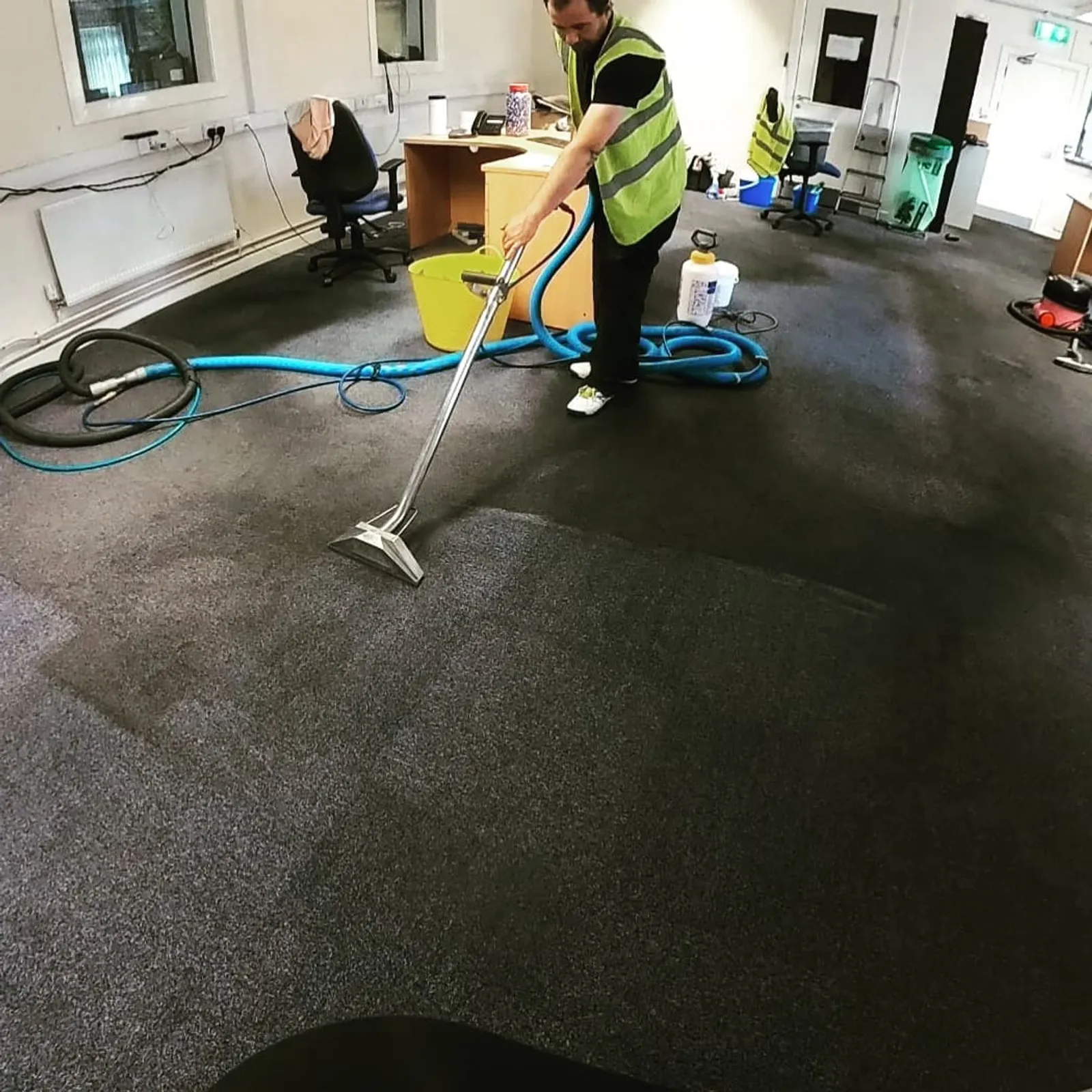
This is the method behind most professional cleans today, including ours. Water is heated — typically to around the boiling point — mixed with a cleaning solution, and injected into the carpet under pressure. A powerful vacuum then extracts it straight back out, along with the dirt and chemical it just loosened, before any of it has a chance to resettle into the fibres. We've covered the full step-by-step process in our steam vs dry cleaning guide if you want the longer explanation of how it compares to low-moisture methods.
Dry and low-moisture cleaning
Dry cleaning covers a few related low-moisture methods, most commonly encapsulation, where a cleaning solution crystallises around dirt particles as it dries and is then vacuumed away, and dry compound cleaning, where an absorbent powder is worked into the carpet and vacuumed back out once it's absorbed the dirt. Both use very little water, so carpet is typically back in use within about an hour — far faster than the several hours hot water extraction usually needs to dry.
Why shampooing largely fell out of favour
The problem with shampooing isn't the cleaning itself — it's what's left behind afterwards. Most carpet shampoos are alkaline detergents, and while alkaline solutions are genuinely good at suspending soil during the clean, they also tend to leave a soft, sticky residue in the fibres if they aren't fully rinsed out. That residue doesn't just sit there harmlessly: every time moisture, foot traffic or humidity reactivates it, it can attract dirt back to it, which is why shampooed carpet often seems to resoil noticeably faster than carpet cleaned by extraction. Bonnet cleaning (a related buff-and-pad method) has the same reputation in the industry for exactly this reason. It's a big part of why hot water extraction, with its dedicated rinse-and-extract step, became the standard that carpet manufacturers and professional cleaners now generally recommend.
Comparing the three honestly
Depth of clean
Hot water extraction reaches deepest, into the pile and backing. Dry methods clean well at a surface-to-mid level. Shampooing is the shallowest of the three, working mainly on the top of the pile.
Residue left behind
Extraction leaves comparatively little, because it rinses and removes rather than buffs and leaves. Dry compound and encapsulation residues are designed to be fully vacuumed away. Shampoo residue is the main long-term drawback of the method.
Drying time
Dry methods are fastest, around an hour. Shampooing dries reasonably quickly since most moisture is buffed out, but hot water extraction leaves carpet damp for several hours.
Resoiling speed
This is where shampooing struggles most — leftover detergent residue genuinely does make carpet attract dirt faster, not slower, which undermines the point of cleaning it in the first place.
So which one should you actually choose?
For a genuine deep clean of a home carpet, hot water extraction is the better all-round choice, which is why it's our default method. Dry and low-moisture cleaning earns its place in offices and other spaces that need a fast turnaround, or as lighter maintenance between deeper cleans. Shampooing still has a role for a quick, low-cost refresh of lightly soiled, low-pile carpet — but it's worth going in with realistic expectations about residue and how soon the carpet might need cleaning again. Whether you're arranging a clean in Ballygall or anywhere else across the city, the right method really does depend on the carpet and the situation, not a single default answer.
We use hot water extraction as standard for our carpet cleaning service across Dublin, Kildare and Wicklow, including Ballygall. For current costs, see carpet cleaning prices, or get a free quote and we'll recommend the right approach for your carpet.
FAQ
Common questions about carpet shampooing vs steam vs dry cleaning
Is carpet shampooing still a good option?
It's largely fallen out of favour with professional cleaners. Shampooing only cleans the top portion of the carpet pile, and the foaming detergent it uses can leave a soft, sticky residue behind if it isn't fully rinsed out — which tends to make carpet resoil faster, not slower. Hot water extraction and modern dry methods were developed largely to solve this exact problem.
What's the actual difference between shampooing and steam cleaning?
Shampooing applies a foaming detergent and works it in with a rotary brush, then buffs most of it back out with an absorbent pad — there's no real rinse step. Hot water extraction ("steam cleaning") injects hot water and solution under pressure and immediately vacuums it straight back out, which is what actually removes the dissolved dirt and most of the chemical rather than leaving it in the fibres.
Which method dries fastest?
Dry and low-moisture methods, typically within an hour or so, because they use little to no water. Hot water extraction leaves carpet damp for several hours. Shampooing sits in between, since most of the moisture is buffed out, though residue can remain even once the carpet feels dry.
Why do carpet manufacturers recommend hot water extraction?
Because it reaches deeper into the pile and backing than shampooing or most dry methods, and because the extraction step actually removes the loosened dirt and cleaning solution rather than relying on it drying out or being buffed away. That combination of depth and genuine removal is why it's the industry-recommended standard for a full deep clean.