
Blog · 9 November 2026
Damp Irish summers: why carpets need faster drying, not less cleaning
There's a common assumption that because Irish summers are unpredictable and often damp, it's better to hold off on carpet cleaning until things "dry out" later in the year. It's an understandable worry, but it has the logic backwards — a humid summer is exactly when getting the drying part right matters most, not a reason to put the clean off.
Irish summers are humid, not dry
Long-term climate averages for Dublin tell a different story to the one most people assume. Afternoon relative humidity across the summer months typically sits in the high 60s to around 70%, and it's often higher again first thing in the morning or on a still, overcast day — the kind of weather that's common rather than exceptional here. Rainfall also doesn't disappear over summer the way it does in genuinely dry climates; some of the wettest spells of the year can land in high summer rather than winter. None of that is unusual for Ireland, but it does mean "summer" isn't shorthand for "dry air" the way it might be elsewhere.
Why humidity slows carpet drying
Carpet dries by evaporation: moisture in the fibres and backing has to move into the surrounding air before it can clear the room. That process depends on how much "room" the air has left to take on more moisture — and humid air already carries more of it. Guidance aimed at drying water-affected carpet generally recommends keeping indoor relative humidity in the 30-50% range to dry efficiently, and treats readings above roughly 60% as a point where drying slows noticeably and mould risk starts to climb. An Irish summer afternoon sitting near 70% humidity is well past that threshold, which is exactly why the same professional clean can take noticeably longer to fully dry on a mild, humid day than on a cooler, breezier one.
The mistake: putting off a clean until it's "drier"
This is where the common assumption backfires. A carpet that's left soiled through a humid summer isn't sitting in some neutral, safe state — it's absorbing ambient moisture and odour from the air around it the whole time, with nothing removing that moisture. A proper professional clean using hot water extraction does the opposite: it injects water to lift the soil, then immediately vacuums the bulk of that moisture straight back out. The carpet starts its drying period noticeably drier than an unwashed one would ever be left to begin with, even before a single fan or window comes into play. Skipping or delaying the clean doesn't avoid the humidity problem — it just leaves a dirtier carpet exposed to it for longer.
What actually speeds drying in a humid summer
The fix isn't to clean less — it's to manage the drying step more deliberately once the clean is done. A few things genuinely help:
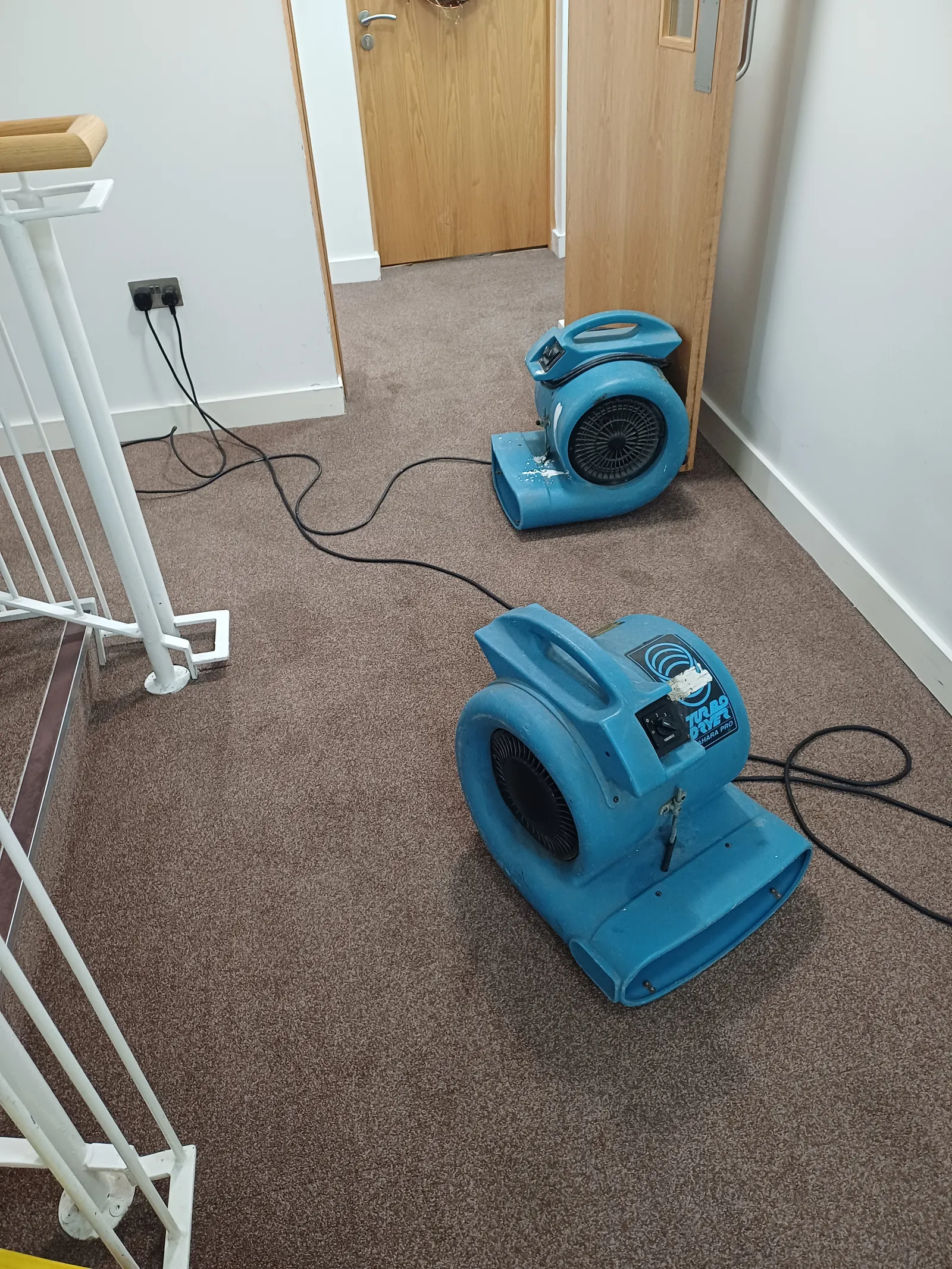
Airflow across the surface. Moving air carries evaporated moisture away from the carpet and replaces it with drier air, which keeps evaporation going rather than letting a saturated layer of humid air sit just above the fibres. Open windows help on a genuinely dry, breezy day — but during a muggy spell, bringing in more humid outdoor air can do more harm than good.
A dehumidifier, used alongside airflow rather than instead of it. Lowering the moisture already in the room's air keeps the gradient between the damp carpet and the air around it working in your favour, so evaporation doesn't stall as the air near the carpet gets saturated. A dehumidifier running in a sealed, still room without any air movement works far less well than the same dehumidifier paired with a fan or two.
Equipment that extracts more water to begin with. This is where the cleaning method itself matters. Stronger extraction suction at the point of cleaning means less water is left behind in the first place, which shortens the entire drying window regardless of what the weather is doing afterwards — one reason professional equipment typically out-performs a rented or domestic unit on drying time, not just cleaning result.
Signs drying has taken too long
Even with good aftercare, it's worth knowing what a drying problem actually looks like. A musty or sour smell that lingers well beyond a day, carpet that still feels damp or noticeably cool underfoot after 24 hours, or any patchy discolouration are all signs that moisture sat around longer than it should have — not necessarily a sign the clean itself was done badly, but a cue to act. Our guide to mould, damp and smell in carpet covers what's worth checking and when it's genuinely time to bring someone in, and our carpet drying time guide goes into realistic drying windows and aftercare in more depth.
This applies whether you're in a sheltered inland spot or somewhere more exposed to the weather — a semi-detached in Blanchardstown and a flat closer to the coast can see quite different humidity on the same afternoon, but the underlying principle doesn't change. If you'd rather leave the extraction and drying management to equipment built for it, get a free quote for your own carpet.
FAQ
Common questions about summer humidity and carpet drying
Does Irish weather really make carpets take longer to dry after cleaning?
It can. Relative humidity across an Irish summer afternoon regularly sits in the high 60s to around 70%, well above the roughly 30-50% range that lets moisture evaporate quickly from carpet fibres. The higher the ambient humidity, the slower that evaporation happens, which is why the same clean can dry noticeably faster on a dry, breezy day than on a mild, still, humid one.
Should I put off cleaning my carpet until the weather is drier?
No — waiting usually makes things worse, not better. A soiled carpet sitting through a humid summer absorbs ambient moisture and odour on its own, with no extraction step removing it. A professional clean with proper hot water extraction actually pulls the bulk of the moisture back out immediately, so the carpet starts drying from a drier baseline than an uncleaned one ever does.
Does a dehumidifier actually help carpets dry faster in summer?
Yes, particularly when it's used together with airflow rather than on its own. A dehumidifier lowers the moisture content of the air in the room, which keeps the humidity gradient between the damp carpet and the air around it working in your favour; fans or air movers then keep that drying air moving across the carpet's surface instead of letting it sit still.
How do I know if my carpet took too long to dry?
A musty or sour smell that lingers well past a day, a carpet that still feels damp or cool underfoot after 24 hours, or any visible discolouration are all signs drying took longer than it should have. See our guide on mould, damp and smells in carpet for what's worth checking and when it's time to call someone in.