
Blog · 16 November 2026
Allergy season and carpets: what dust mites actually are and what helps
Dust mites get blamed for a lot during allergy season, but most people have never actually read what they are, what they eat, or — more importantly — what part of them is actually causing the sneezing. Here's the honest version, with what genuinely helps and what's mostly marketing.
What a dust mite actually is
A house dust mite is a microscopic arachnid, too small to see without magnification, that feeds mainly on flakes of shed human and pet skin. It lives wherever that food supply naturally collects — mattresses, pillows, carpets, upholstered furniture and soft toys — which is exactly why bedrooms and living rooms are its preferred habitat, not because either room is dirty, but because both quietly shed skin cells every day. The Asthma Society of Ireland notes that dust mites live in carpets and furniture, especially beds and other soft furnishings, and is refreshingly blunt about the practical reality: it's effectively impossible to eliminate them from a home completely. A study of house dust samples from homes across Ireland, carried out by researchers at the University of Galway, found house dust mites made up the large majority of all mites recorded — so if a home has carpets, soft furnishings and people living in it, some level of dust mite presence is close to a given, not a sign of a cleaning failure.
The part that actually causes the allergy
This is the detail that gets skipped in most advice: it isn't the live mites themselves causing the itching, sneezing or wheeze. Both the NHS and the US Environmental Protection Agency are clear that the main trigger is the mites' droppings and decomposed body fragments, which are light enough to become airborne once disturbed — by vacuuming, plumping a pillow, or just walking across a carpet — and are then inhaled. Clinical references describe the key allergen, known as Der p 1, as a digestive enzyme that survives inside those microscopic faecal pellets long after the mite itself is gone. In practical terms, that means the mites don't need to touch a person to cause a reaction; their waste just needs to be stirred up into the air someone is breathing.
Why Irish homes don't get an easy pass
Dust mites thrive in warm, humid conditions, and that's relevant here: patient information from Beaumont Hospital in Dublin notes that the recommended indoor humidity range for limiting dust mites, roughly 35-50%, is genuinely difficult to maintain consistently in Ireland's climate. The HSE separately flags persistent damp or condensation in a home as worth addressing specifically because of its link to allergy and respiratory symptoms. None of that is a reason to panic about any one house — plenty of Dublin homes manage this fine — but it does mean ventilation and damp control earn their place on the list below rather than being optional extras. If a carpet or room has a persistent musty smell alongside visible damp, that's a separate, more specific issue worth reading about in our guide to mould and damp smell in carpet rather than treating as ordinary dust mite activity.
What genuinely helps — and what doesn't do much on its own
The measures with real backing from health bodies are fairly consistent and, honestly, a bit unglamorous: washing bedding weekly in hot water around 60°C, since that temperature is cited by health sources as enough to kill mites in fabric that can tolerate it; vacuuming regularly with a HEPA-filter vacuum rather than a basic one; using allergen-proof covers on mattresses and pillows; keeping rooms ventilated; and reducing indoor humidity where that's practical, since several sources note mites thrive above roughly 50% relative humidity. No single step is a fix by itself — a vacuum with a weak filter can push fine allergen particles back into the air rather than capturing them, and lowering room humidity doesn't always reach the humid micro-climate inside a thick carpet pile or mattress. It's the combination, kept up consistently, that actually moves the needle, which is also why our general guide on how often carpets should be cleaned is worth reading alongside this — allergen control is really about routine, not a one-off treatment.
Where professional carpet cleaning actually fits in
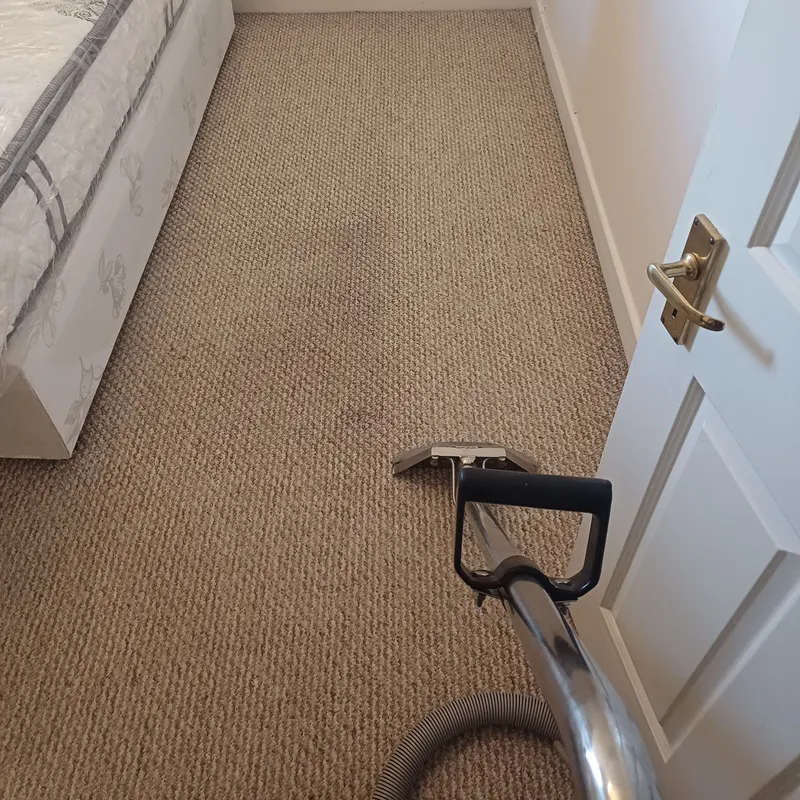
This is the part worth being straight about: professional hot water extraction, including our own, is not a dust mite cure, and no legitimate cleaning service should claim it eliminates allergens. The widely circulated claim of dramatic allergen reduction from carpet cleaning traces back to a single study funded by a carpet-cleaning company, not an independently replicated piece of research, so it should be treated with real caution rather than quoted as settled fact. An independently peer-reviewed study, by contrast, found that both steam cleaning and plain vacuuming significantly reduced dust mite allergen levels in carpets — which suggests regular vacuuming is doing a lot of the genuine work, and that a deeper clean is best thought of as a periodic addition to that routine rather than a replacement for it. A proper clean does remove soil, debris and some settled allergen load from deep in the pile that an ordinary vacuum won't reach, and that's a legitimate, if modest, part of an allergy-conscious routine — just not the whole answer.
Humidity and ventilation challenges look a little different house to house — an older place out in Bohernabreena, tucked under the Dublin mountains, tends to deal with more ambient damp than a newer apartment near the city centre, whatever the carpet itself is like. If allergy symptoms are a factor in your home, a professional carpet clean as part of a wider routine is a reasonable step — get a free quote and we'll talk through what's realistic for your space.
FAQ
Common questions about dust mites and allergies
Is it the dust mites themselves that cause allergy symptoms?
Not directly. The NHS and the US Environmental Protection Agency both note that it's mainly the mites' droppings and decomposed body fragments that trigger allergic and asthma symptoms when they become airborne and are inhaled, not the live mites crawling about. That's why disturbing carpets, bedding or soft furnishings — by vacuuming, making a bed or walking across a room — can trigger a reaction even though you'd never see or feel a mite itself.
Can carpet cleaning get rid of dust mites completely?
No, and any claim to that effect should be treated with scepticism. The Asthma Society of Ireland is direct about this: it's effectively impossible to eliminate house dust mites from a home entirely. Professional cleaning can help reduce surface dirt, dust and some allergen load as part of a broader routine, but it isn't a cure and doesn't eliminate them.
Does Ireland's damp climate make dust mites worse?
It can contribute. Dust mites thrive in warm, humid conditions, and Dublin hospital patient-information material notes that keeping indoor humidity in the recommended 35-50% range is genuinely difficult to maintain consistently in Ireland's climate. Persistent damp or condensation in a home is also something the HSE specifically flags as worth addressing for allergy sufferers.
What actually helps reduce dust mite allergens at home?
Washing bedding weekly in hot water (around 60°C), using a vacuum with a HEPA filter, allergen-proof covers on mattresses and pillows, good ventilation, and reducing humidity where practical all have genuine backing from health bodies like the NHS and HSE. No single step removes the problem on its own — it's the combination, kept up regularly, that makes the real difference.