
Blog · 22 October 2026
Getting carpets ready for winter: damp, mud and heating season
Carpets don't suddenly get harder to keep clean the day the clocks go back — but the next few months genuinely do work against them in ways summer doesn't. Closed-up houses, wetter conditions outside and more foot traffic indoors all stack up. Here's what's actually changing, and what's worth doing about it before it does.
It's not the cold — it's the closed-up house
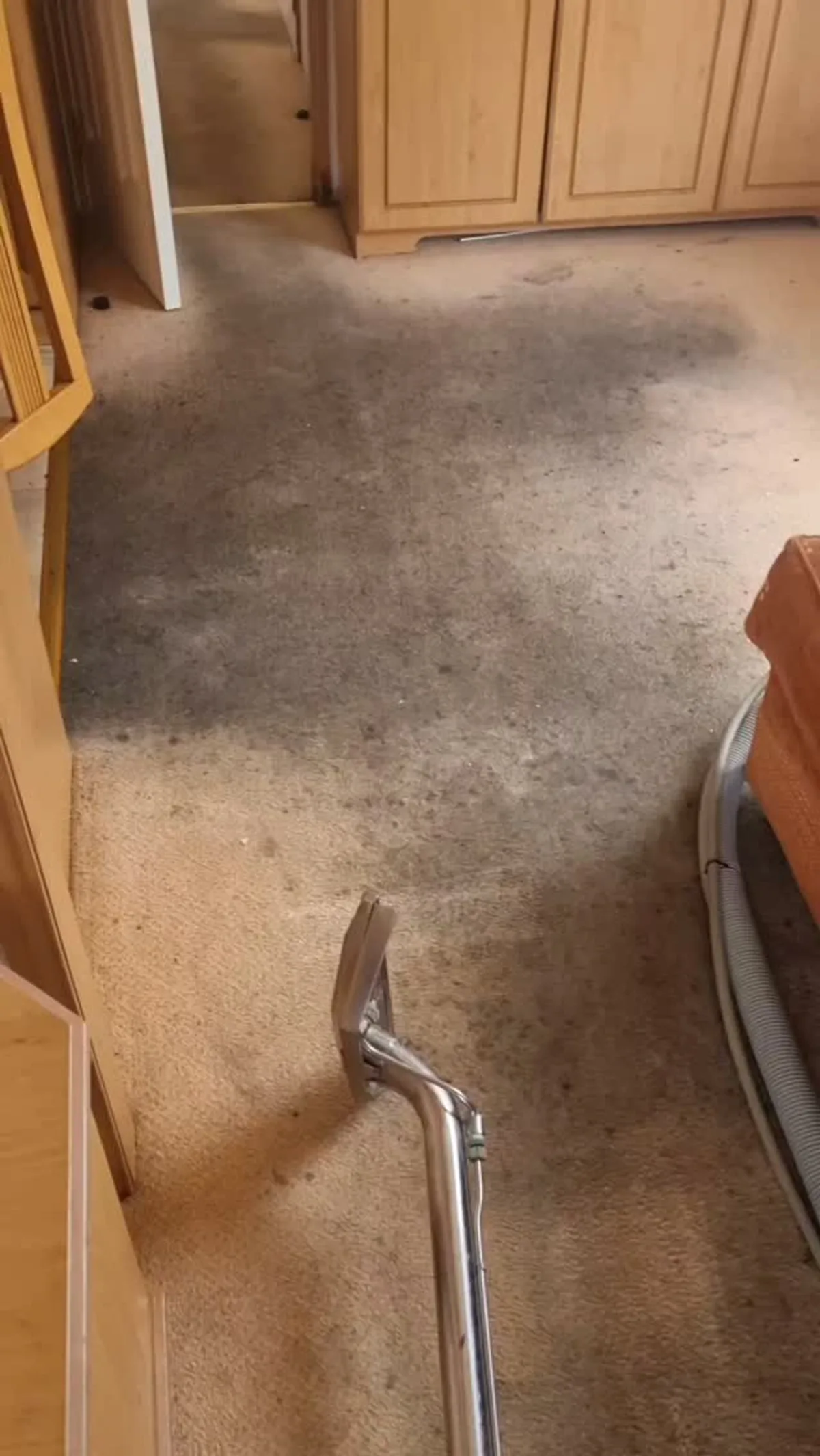
Heating itself doesn't dirty a carpet. What changes once the heating season starts is everything around it. Windows and doors stay shut to keep the warmth in, so a house that aired itself out all summer through open windows and back doors suddenly isn't getting that same turnover of air. Less ventilation means dust and anything tracked in has less chance to disperse or dry out, and it tends to settle in the same high-traffic strips — hallways, in front of external doors, the route from the kitchen to the sitting room — rather than spreading evenly.
Mud and grit: the damage that happens a little at a time
Mud itself is mostly just inconvenient — it's visible, and it vacuums or lifts out reasonably well once it's dried. Grit is the quieter problem. Fine grit and sand tracked in on shoes is hard and sharp at a microscopic level, and every footstep grinds a small amount of it against the base of the carpet fibres, acting a bit like sandpaper over time. It's not something you'll notice after one wet week, but across a winter of daily foot traffic through the same few metres of hallway, it's a real contributor to carpet looking worn and dull in exactly those spots long before the rest of the room does.
A decent entry mat — ideally one long enough to get both feet on before stepping onto the carpet proper — does more for this than almost anything else, simply by catching the grit before it ever reaches the fibres.
Road salt doesn't just disappear once it's dry
On salted or gritted paths and driveways, some of that residue inevitably ends up on shoes and then on the carpet near the front door. Salt behaves differently from ordinary dirt: it tends to hold onto moisture rather than drying out cleanly, which keeps that patch of carpet feeling slightly damp for longer and makes it attract more everyday dirt in the meantime. It's rarely dramatic after a single winter, but it's one more reason the area right inside an external door tends to need more frequent attention than the rest of the house between October and March.
Why carpets can feel damp — or smell musty — more in winter
Moisture that would dry out within an hour on a breezy summer day can sit for much longer once the house is sealed up and the air isn't moving through it the same way. That applies to damp shoes and paws as much as it does to any cleaning you do yourself — a DIY spot-clean that would dry fine in July can stay noticeably damp overnight in December. If a musty smell shows up and doesn't clear once things have actually dried, it's worth taking seriously rather than assuming it'll sort itself out; our guide on mould, damp and smell in carpet covers what that can actually mean. The same logic applies after a professional clean — drying simply takes longer in a closed-up, less ventilated winter room, which our carpet drying time guide goes into in more detail.
A practical routine, not a one-off panic
None of this needs an overhaul — it's mostly about adjusting habits for the season rather than doing anything dramatically different. A proper entry mat at every external door, a quick habit of wiping or removing wet shoes, vacuuming the high-traffic strips more often than the rest of the room, and airing the house out for a few minutes on the dry, bright days that do come along all help far more than people expect, precisely because the house isn't getting that ventilation for free anymore. In a terraced house with limited cross-ventilation in the city centre or a semi-detached out toward the foothills around an area like Barnacullia, the specifics differ, but the underlying issue — less airflow, more tracked-in moisture — is the same.
Why timing a clean for before winter makes sense
A carpet that goes into winter already carrying a summer's worth of accumulated dust and ground-in soil has far less capacity to cope with everything the next few months add on top. Starting the season with a properly extracted, genuinely clean carpet — rather than one that's just had the surface hoovered — means there's less already embedded in the pile for winter mud, grit and moisture to combine with. If a clean is on the cards, our preparation checklist covers what's worth doing beforehand to get the best result from it.
If your carpets could do with a proper clean before the weather really turns, our carpet cleaning service covers Dublin, Kildare, Wicklow and the rest of Leinster, including homes around Barnacullia. Get a free quote to find a slot before the diary fills up for the season.
FAQ
Common questions about carpets and winter
Does turning the heating on actually make carpets dirtier?
Not directly — heat itself doesn't soil a carpet. What changes is everything around it: windows and doors stay shut for warmth, so less fresh air moves through the house, and that same closed-up house gets more muddy, wet footfall through it as the weather turns. The carpet ends up carrying more of what comes in from outside with nowhere as easy for it to air out.
Why does carpet feel damp or smell musty once winter sets in?
Usually a combination of wetter conditions outside and less ventilation inside. Shoes and pets bring in moisture that a carpet would normally dry out quickly in summer, but with windows shut and less airflow, it can sit damp for longer. If a musty smell doesn't clear once things actually dry out, or it keeps coming back, that's worth looking at properly — see our guide on mould, damp and smell in carpet.
Does road salt and grit actually damage carpet?
Tracked-in grit is the bigger everyday risk — it's hard and abrasive, and ground underfoot it works like sandpaper on carpet fibres over time. Salt is more of a staining and soiling issue: it tends to hold onto moisture, which keeps the area feeling damp and attracts dirt faster. Neither is dramatic from one winter, but both add up if they're never properly lifted out.
Is it better to get carpets cleaned before or during winter?
Before, if you can time it. A clean carpet going into winter starts the season without the summer's accumulated dust and grime already baked into the pile, and it gives any moisture less to cling to. If you're booking one in, our preparation checklist covers what to do beforehand.