
Blog · 15 October 2026
New carpet smell explained: what it is and how long it lasts
Anyone who has moved into a freshly carpeted home or flat knows the smell — a faint, slightly chemical note that wasn't there with the old flooring. It's one of the most common questions new carpet owners ask, and the honest answer is more specific, and less alarming, than most people expect.
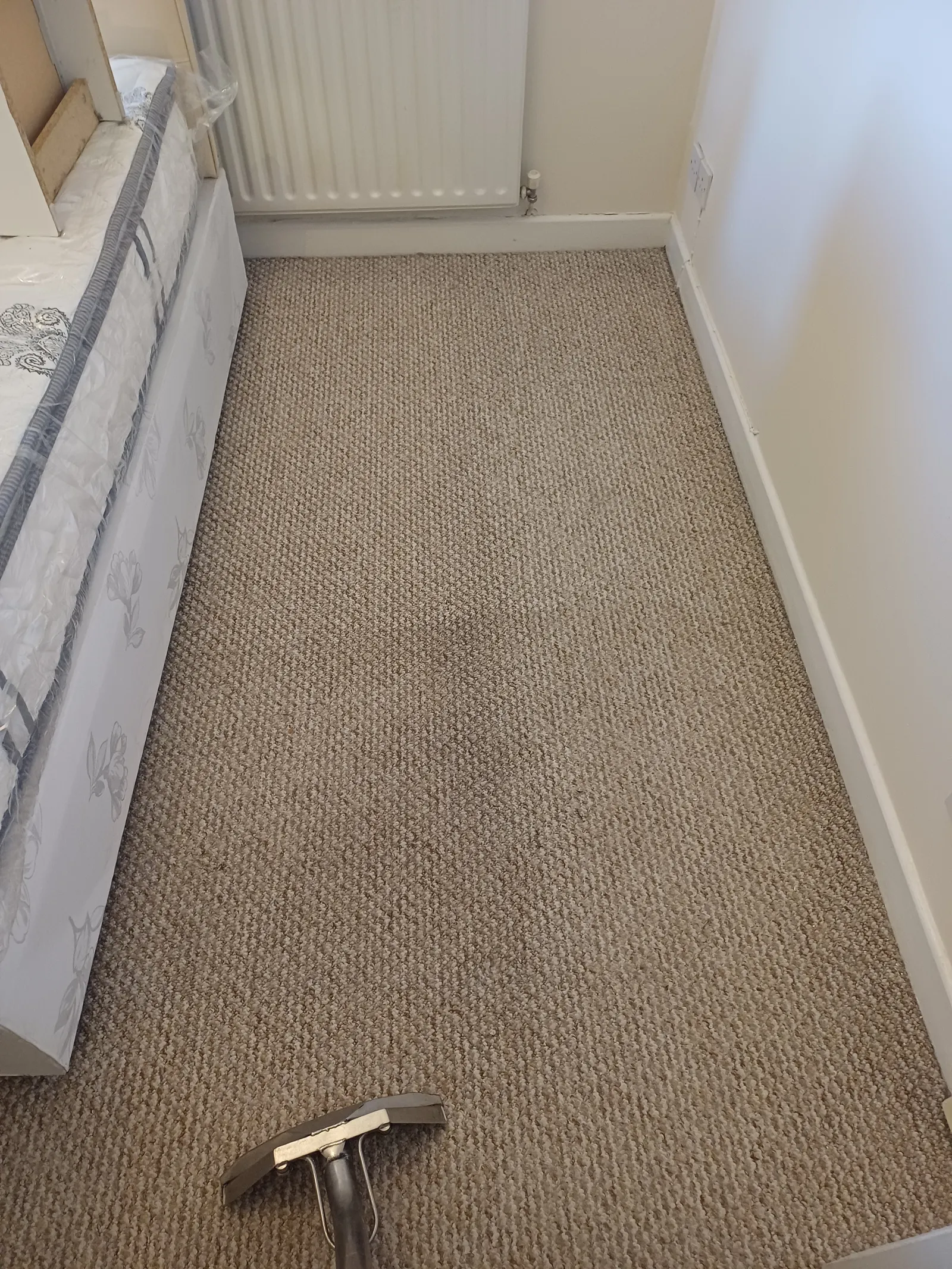
What's actually causing the smell
The new-carpet smell comes from off-gassing — low levels of volatile organic compounds (VOCs) releasing from the carpet itself and the materials used to fit it. Synthetic fibres, the backing, and the adhesive that bonds the carpet's layers together can all contribute, and the padding underneath plays a bigger part than most people assume. None of this is dirt or a manufacturing fault; it's simply a by-product of how carpet is made and installed.
The specific compound behind the smell
Most of that distinctive odour is traced to a single compound called 4-phenylcyclohexene, usually shortened to 4-PCH. It forms as an unintentional by-product when the styrene-butadiene latex used in most carpet backing is manufactured, and its smell is detectable by most people at extremely low concentrations — which is exactly why a newly laid carpet can smell noticeable even though the actual chemical quantities involved are small.
Why this became an industry-wide issue
This isn't a new concern. In 1987, new carpet installed at the US Environmental Protection Agency's own headquarters led to a well-publicised run of employee complaints about indoor air quality, with 4-PCH emissions identified as a contributing factor. The episode pushed carpet manufacturers, government bodies and independent testers into what became known as the Carpet Policy Dialogue, which led to a voluntary low-emission testing and labelling programme still used across the industry today. It's a large part of why off-gassing from new carpet is generally lower now than it was a few decades ago.
Why it fades the way it does
Off-gassing isn't a steady drip — it front-loads. Emissions are highest in the first day or two after a carpet is fitted, then drop off fairly quickly from there. With reasonable ventilation, most people notice the smell has faded substantially within one to two weeks. A much lower, background level of emission can continue for longer, but by that point it's typically well below what most noses pick up in a lived-in room.
What genuinely speeds it up
A few things make a real difference, and they're mostly about air exchange rather than anything more elaborate:
- Open the windows. Letting fresh air circulate through the room for the first few days is the single most effective step — it lets the compounds disperse outward instead of building up in a closed space.
- Don't seal the room up immediately. Moving straight in and keeping doors and windows shut traps the emissions exactly where you'll notice them most.
- Keep the room at a normal temperature. Off-gassing happens a little faster in warmer conditions, but a sealed, overheated room with no airflow can end up prolonging the smell rather than clearing it, since the compounds have nowhere to go.
- Give it time rather than masking it. Air fresheners and scented sprays cover the smell rather than clearing it, and some add their own VOCs into the mix. Ventilation addresses the actual cause.
Is it something to actually worry about
For the large majority of people, no — the smell is mild, temporary, and not associated with any lasting health effect at typical household levels. People who are particularly sensitive to smells, or who have asthma or other respiratory sensitivities, sometimes notice mild irritation while the odour is strongest, and in that case extra ventilation or simply spending less time in the room for the first few days is a reasonable precaution. If a strong chemical smell persists for weeks rather than days, or comes with headaches or breathing discomfort, it's worth raising with the carpet retailer or fitter rather than assuming it will simply pass.
New smell vs. a musty smell — they're not the same thing
It's worth being clear that the smell covered here is the normal, faint, slightly chemical note from a freshly fitted carpet — not a musty or damp smell. If what you're noticing is closer to mould, dampness or a stale odour, especially in an older carpet or after water exposure, that's a different issue with a different cause; our guide on musty and damp carpet smells covers what's actually behind that and when it needs addressing properly rather than just airing out.
Whether it's a new build in Ballyroan or a freshly carpeted room anywhere else in Dublin, the pattern is the same: a few days of noticeable smell, a steady fade with decent ventilation, and nothing that calls for anything more than open windows and a bit of patience.
New carpet doesn't need professional cleaning — the smell isn't dirt, and a wet clean on a brand-new carpet isn't necessary. Once it's settled in and sees regular use, our carpet cleaning service keeps it looking its best, and our guide to how often carpets actually need cleaning covers when that first clean is worth booking.
FAQ
Common questions about new carpet smell
Is new carpet smell harmful to breathe?
For most people, no — it's generally mild and fades within days to weeks. Some people with sensitivities notice irritation while the smell is strongest. A well-publicised 1987 case at the US EPA's own headquarters, where new carpet caused air-quality complaints, led the carpet industry to set up a voluntary low-emission testing programme, which is part of why new carpet overall emits far less than it once did.
How long does new carpet smell actually last?
Emissions are strongest in the first 24 to 72 hours after a carpet is laid, and the smell usually drops off noticeably within one to two weeks with reasonable ventilation. Very low-level off-gassing can continue in the background for longer, but it's well past the point most people would notice it.
Does airing the room out actually help, or is that a myth?
It genuinely helps. Opening windows and letting air circulate for the first few days lets the compounds causing the smell disperse rather than build up in a closed room, and it's one of the few things that measurably shortens how long the smell is noticeable.
Will cleaning a brand-new carpet get rid of the smell faster?
Not really, and it isn't something a newly fitted carpet needs anyway. The smell comes from compounds built into the backing and adhesive, not dirt sitting on the surface, so a clean won't remove the source. If what you're smelling is damp or musty rather than a new, slightly chemical smell, that's a different issue — see our guide on musty and damp carpet smells instead.