
Blog · 26 November 2026
Open fireplaces and carpet: soot and smoke residue explained
Carpet right next to an open fire or stove takes a different kind of hit from the rest of the room — not spills or footprints, but a fine film of soot that drifts, settles and, if it's handled the wrong way, smears into something far worse than it started out as. Here's what soot actually is, why it behaves so differently from an everyday stain, and what a sensible first response looks like.
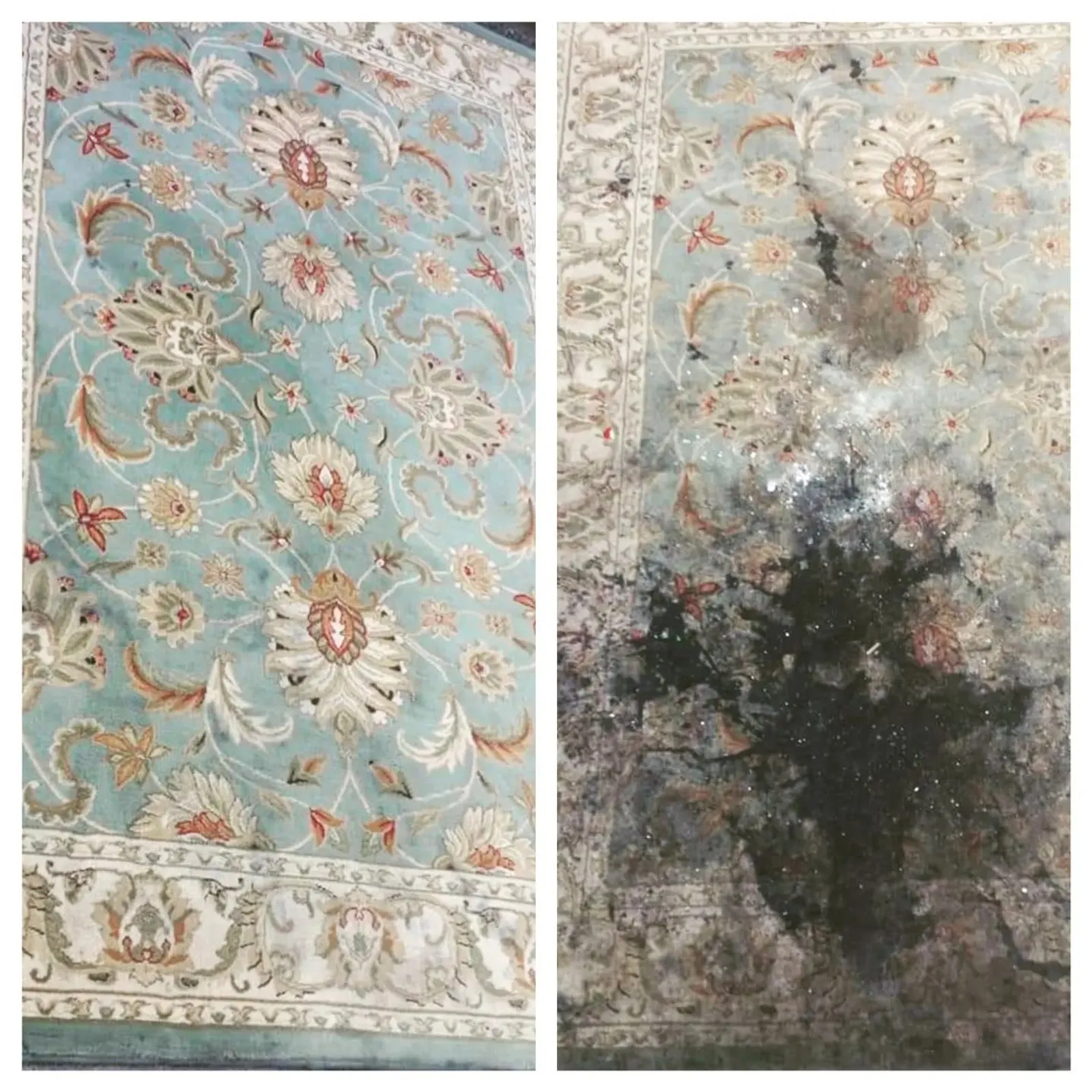
What soot actually is
Soot is the fine black residue left behind by incomplete combustion — unburnt carbon particles from wood, turf or coal that didn't fully combust in the fire and instead rose with the smoke before settling on whatever surface was nearby. It isn't a single uniform substance either: a hotter, well-ventilated fire tends to produce drier, powdery soot, while a cooler, oxygen-starved fire or a damp fuel leaves an oilier, greasier residue that behaves more like a grease stain once it lands. That distinction matters, because the oilier the soot, the more it wants to bond into fibres rather than sit loosely on top of them.
Why it behaves so differently from a normal stain
Most carpet stains are a liquid or food substance that sits on the surface of the fibre until it's lifted off. Soot is different on two counts: the particles are extremely fine, small enough to work down into the base of the pile rather than staying on top, and many soot residues carry a slightly acidic, oily quality that makes them want to cling rather than rinse away. Put those two things together and you get a residue that's genuinely more stubborn than a comparable-looking stain from something like dust or mud — and one where the wrong first move can make things meaningfully worse rather than better.
The mistake that makes it worse: adding moisture too soon
The single most common way a soot mark gets worse is wiping it with a damp cloth straight away. It feels like the obvious response, but because soot is fine and oily, water turns it into a smear rather than lifting it — spreading the mark over a wider area of carpet and pushing some of it deeper into the fibres as it dries. The more reliable approach is the less intuitive one: remove as much dry soot as possible first, and only consider anything wet once the bulk of the loose particles are gone.
Vacuuming: useful, but the attachment matters
Vacuuming is generally the right first step for loose, dry soot — the alternative of sweeping or brushing tends to spread fine particles over a wider area rather than lifting them away. The detail that's easy to miss is which part of the vacuum touches the carpet: a rotating brush bar can grind soot further into the base of the pile instead of pulling it out, so a hose or crevice attachment that doesn't agitate the fibres is the safer choice. A machine with decent filtration also helps, since very fine soot particles can otherwise pass straight through a weak filter and settle back into the room.
Why a quick scrub can leave a permanent mark
Soot residues don't all respond to the same treatment — an oilier, greasy soot generally needs a different approach than a dry, powdery one, and the wrong product or method can set the mark rather than lift it. Carpet colour matters too: a pale carpet or rug shows even a thin film far more readily than a dark one, and fine soot contamination can leave a soiling line along skirting boards and furniture edges that's notoriously hard to fully remove, even with a proper clean. None of that is a reason to panic over a small, fresh mark — but it is a reason to be cautious with anything beyond light, surface dusting.
When it's worth stopping and getting it looked at
A light dusting of soot caught quickly, on a carpet that can take some careful dry handling, is often manageable without drama. A larger patch, a mark that's had time to bond into the fibres, or soot on a rug or carpet you'd rather not experiment on is a different situation — at that point, further DIY attempts risk turning a treatable mark into a much harder problem. Our guide to common carpet stains covers the general principles that apply across most stain types, and if a soot mark has gone beyond a quick dry clean-up, it's worth getting a professional stain removal opinion before trying another product on it.
A seasonal habit worth building
Open fires and stoves get far more use once the weather turns, and that means more opportunities for a stray ember, a draught-blown puff of smoke when a door opens, or ash carried on a shoe to end up on the carpet nearest the hearth. Whether you're in a period house in Brittas with an old hearth still in daily use through the winter, or anywhere else with an open fire as the main heat source, a quick dry check of the carpet near the fireplace after each use — rather than waiting until a mark is obvious — makes it far less likely that a small amount of soot ever gets the chance to bond in and become a harder job.
If soot or smoke residue has already settled into a carpet or rug near your fireplace, our carpet cleaning service across Dublin, Kildare, Wicklow and the rest of Leinster can assess it properly rather than risk a DIY attempt making it worse, or get a free quote.
FAQ
Common questions about soot and smoke residue on carpet
Why is soot harder to deal with than a normal carpet stain?
Soot isn't really a stain in the usual sense — it's a fine, greasy, slightly acidic particle that's small enough to work its way deep into carpet fibres rather than sitting on the surface. That combination of oiliness and tiny particle size is why it smears and spreads so easily once anything wet touches it, instead of lifting away the way a spilled drink or food stain does.
Should I vacuum soot off the carpet straight away?
Dry soot is far easier to deal with than wet soot, so removing as much of it as possible while it's still dry is generally the right first instinct. The detail that trips people up is the vacuum head itself — a rotating brush bar can grind soot deeper into the pile rather than lifting it out, so a hose or crevice attachment with no brush contact is the safer choice, ideally with a machine that has a proper filter so the fine particles don't just get redistributed into the air.
Can I just scrub it with a damp cloth?
Rubbing a soot mark with a damp cloth is one of the most common ways it gets worse, because the moisture turns fine dry particles into a smear that bonds further into the fibres and sets as it dries. It's worth resisting that instinct and getting as much loose soot off dry first, before any wet method is even considered.
Does every soot mark need a professional clean?
A light, fresh dusting of soot that's caught early can sometimes be managed with careful dry removal. A larger patch, an older mark that's already bonded into the fibres, or soot on a rug or carpet you don't want to risk experimenting on is a different situation — that's when it's worth getting a professional opinion rather than making it worse with trial and error.