
Blog · 28 August 2026
Rust stains on carpet from furniture legs or metal: what actually works
A faint orange-brown ring under a bed frame, a plant stand, or a metal chair leg is one of the more confusing marks to find on carpet, because nothing was ever spilled there. It's rust, and it needs a different approach to a normal stain — including one very common household product you should leave alone entirely.
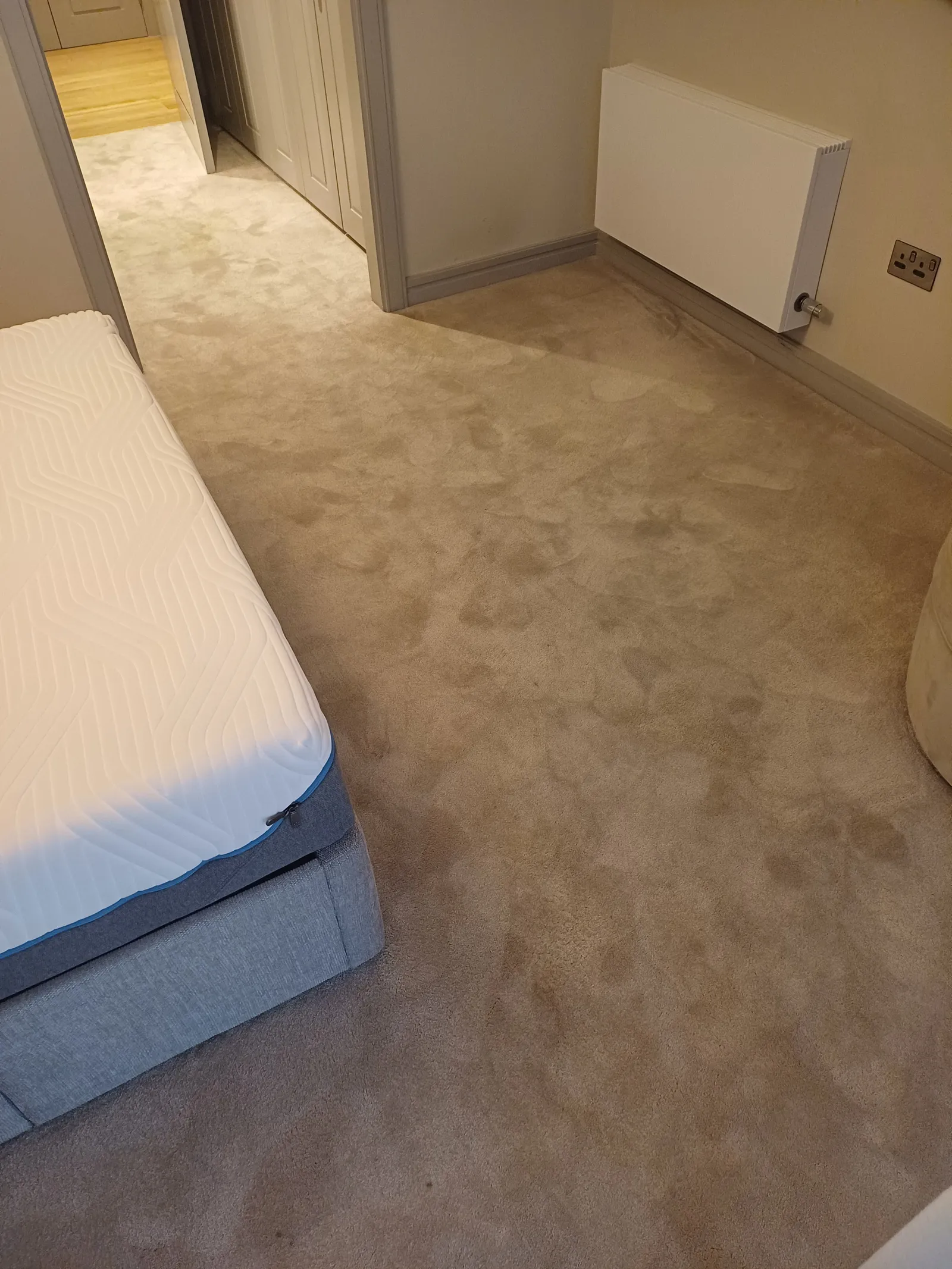
Why furniture legs cause rust in the first place
Rust is iron oxide — the result of iron or steel reacting with oxygen and moisture over time. Furniture legs, bed frame castors, metal plant stands and even the feet on some appliances can corrode if they've been sitting somewhere damp, or if condensation forms underneath them. Once that corrosion starts, the rust particles transfer to whatever the metal is resting on, which is why the stain usually appears as a ring or a small cluster of marks that exactly match the shape of the leg or base sitting above it.
The one product to avoid: bleach
Chlorine bleach is the instinctive reach for a lot of stubborn stains, but it's the wrong move here. Bleach is an oxidiser, and rust is already the product of an oxidation reaction — using an oxidiser on it tends to push the reaction further rather than reverse it, which can darken the mark or set it into the fibres rather than lift it out. Rust responds to acids, not oxidisers, which is the logic behind almost every method that actually works on it.
What to try first
Before reaching for anything acidic, start gently. If there's any loose, dried rust sitting on top of the fibres, carefully scrape it away with something blunt like the edge of a spoon, working from the outside of the mark inward so you're not spreading it further. Then blot — don't rub — the area with a small amount of dish soap on a damp white cloth, working in from the edges. This won't shift a genuine rust stain on its own, but it clears away surface residue and gives you a clean read on how much of the mark is left before moving to a stronger method.
The acid method: lemon juice, vinegar and salt
For the rust itself, an acidic mix is the standard approach: lemon juice or white vinegar combined with a small amount of salt, applied directly to the stain. The acid helps break the rust down chemically, while the salt adds a light abrasive action that helps work it out of the pile. Left to sit for a while and then blotted with a clean, damp cloth, this lifts a good proportion of lighter or more recent rust marks — though it isn't a guaranteed fix on every carpet, and it's always worth testing on a hidden patch of carpet first in case of any colour reaction, particularly on natural fibres like wool.
When the stain is old or won't shift
Rust that's had time to set into the fibres binds more stubbornly than a fresh mark, and repeated scrubbing at it usually damages the pile before it makes any real difference to the stain. If the acid method doesn't fully clear it, a dedicated rust-removal product made for fabric or carpet — used exactly as directed, ideally after a spot test — is a safer next step than continuing to work at it by hand. This is also where our own common carpet stains guide is worth a read, since the same testing and blotting principles apply across most stain types, not just rust.
Stopping it from happening again
The most reliable fix is preventing the metal from touching the carpet directly. Plastic leg caps, felt pads or small furniture coasters under metal legs create a barrier that stops rust transferring even if the metal itself corrodes, and they're inexpensive compared to dealing with a set-in stain later. It's a small habit that matters more in older houses with less consistent heating and ventilation — whether that's a period house in Ballsbridge or anywhere else with metal-framed furniture sitting on carpet for years at a time, damp conditions around a table or bed leg are usually what starts the corrosion in the first place.
If a rust mark has already set into the carpet and home methods aren't shifting it, our carpet cleaning service covers Dublin, Kildare, Wicklow and the rest of Leinster and can assess whether it's treatable. See carpet cleaning prices for a realistic idea of cost, or get a free quote for your own carpet.
FAQ
Common questions about rust stains on carpet
What actually causes rust stains on carpet?
Rust is iron oxide, formed when metal reacts with oxygen and moisture. Furniture legs, bed frames, plant stands and other metal objects can develop rust if they get damp, and that rust then transfers to the carpet fibres wherever the metal has been sitting — often showing up as a ring-shaped mark matching the shape of the leg or base.
Can I use bleach on a rust stain?
No. Bleach is an oxidiser, and rust is already an oxidation product of iron, so bleach tends to drive the reaction further rather than reverse it — this can darken the mark or set it permanently instead of lifting it. Rust responds to acids, not oxidisers, which is why methods built around lemon juice, vinegar or a dedicated rust remover work better.
Does the lemon juice and salt method actually work?
It can help on lighter or more recent rust marks. The acid in lemon juice or white vinegar helps break the rust down chemically, while salt adds a mild abrasive action to help lift it from the fibres. It's not guaranteed on every stain, particularly older or heavily set ones, but it's a reasonable first attempt before reaching for anything stronger.
What if the rust stain is old or won't come out?
Older, set-in rust can bind more stubbornly to carpet fibres than a fresh mark, and repeated scrubbing risks damaging the pile without shifting the stain. At that point a dedicated rust-removal product formulated for fabric and carpet, used exactly as directed, or a professional assessment is usually a better route than continuing to work at it by hand.