
Blog · 21 September 2026
Silk and viscose rugs: why they need specialist handling
A silk or viscose rug can be the most striking piece in a room — the sheen catches light in a way wool and synthetic fibres simply don't. It's also the rug most likely to be permanently damaged by an ordinary cleaning attempt, because the two things that make it look so good are exactly what make it so fragile once water is involved.
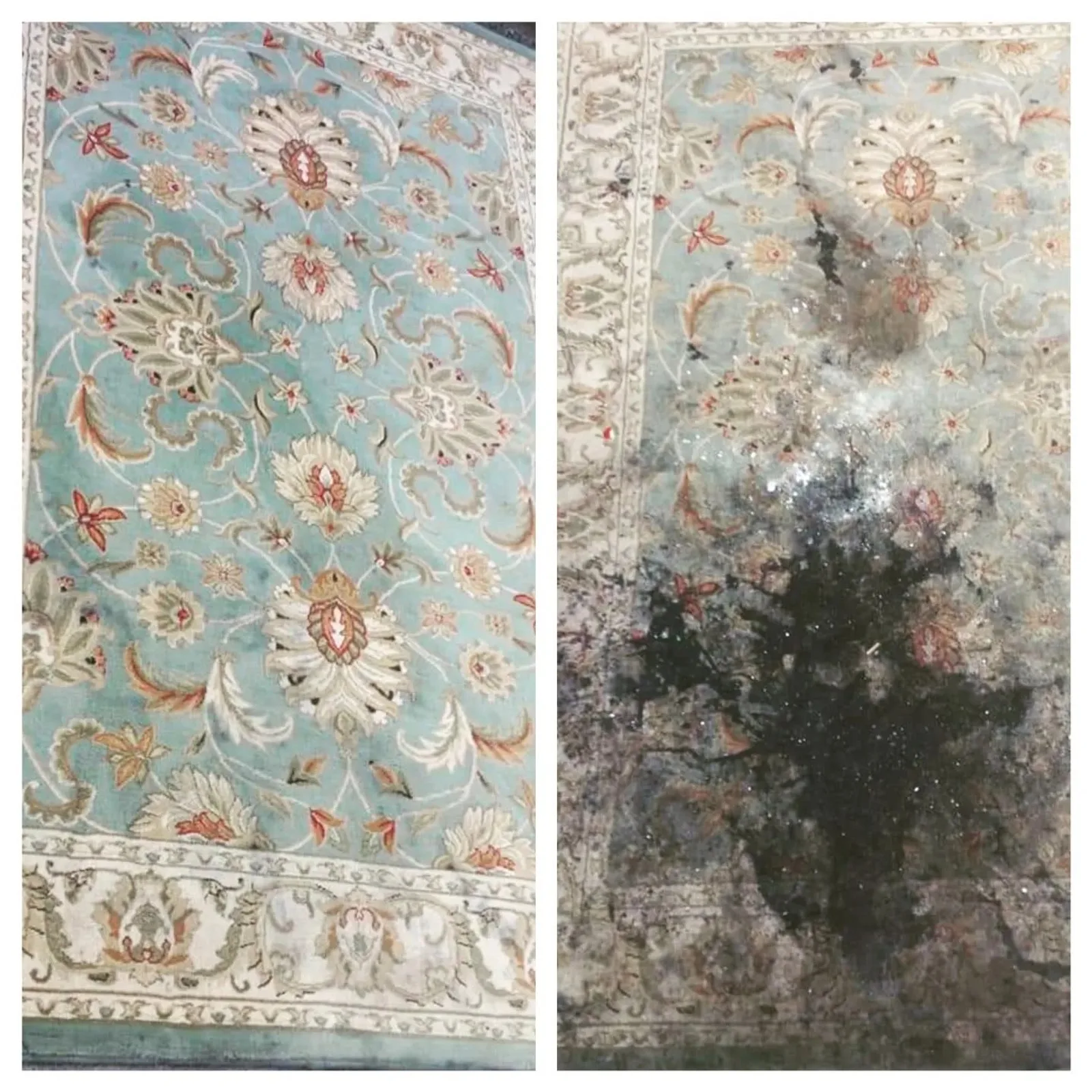
Silk and viscose are not the same fibre
The two get lumped together constantly, and it's an easy mistake to make — both have that same glossy, light-catching finish. But real silk is a natural protein fibre, produced by silkworms and woven the same way it has been for centuries. Viscose, often sold under names like "art silk" or "bamboo silk," is a manufactured fibre made by chemically processing plant cellulose (usually from wood pulp) into a fine, lustrous thread designed to mimic silk's look at a fraction of the cost. They can be almost impossible to tell apart by eye, but their chemistry is completely different — and that difference is exactly what determines how they need to be cleaned.
Why water is the real danger for viscose
Because viscose is cellulose-based, it behaves like a plant fibre when it gets wet — and not in a good way. Research into the material shows that viscose can lose roughly half its dry strength once saturated, and that the fibre swells and softens the more moisture it holds. It's also prone to what's known as cellulosic browning: natural sugars in the cellulose rise to the surface as the fibre dries and oxidise, leaving yellow or brown patches that weren't there before the "clean." A rug can go in looking fine and come out with staining that has nothing to do with dirt at all.
Silk brings a different set of risks
Silk doesn't brown the way viscose does, but as a protein fibre it has its own sensitivities — it can be weakened by harsh alkaline cleaning agents, and vigorous scrubbing or agitation can crush the pile and permanently dull the sheen that makes silk rugs valuable in the first place. Colour bleeding is another real risk on both silk and viscose rugs, particularly on pieces with dark or saturated dyes, if the wrong chemistry or too much moisture is used during cleaning.
Why the standard hot water extraction method isn't used here
Hot water extraction is the right method for most wool and synthetic carpets — it's a wet-injection-and-extraction process that gets deep into the pile. That level of moisture and mechanical action is exactly what a silk or viscose rug can't safely absorb. Cleaning these fibres properly means identifying the material first, then using a much lower-moisture, gentler approach with chemistry suited to protein or cellulosic fibres, and tightly controlling how the rug dries afterwards. Skipping that step-by-step care is how a rug ends up with permanent watermarking, a harsh or "crunchy" texture, or patches that never fully blend back in — none of which can reliably be undone once it's happened.
Signs a rug is already under stress
A few warning signs are worth acting on early rather than waiting: patches that look duller or rougher than the rest of the rug, faint rings or tide-marks from a spill that was blotted rather than properly treated, or areas where the pile feels flattened and doesn't spring back. None of these are things to try to fix with a household carpet cleaner or a DIY spot treatment — on these fibres, the wrong response to a small problem is usually what turns it into a permanent one.
Living with one day-to-day
The good news is that day-to-day care for a silk or viscose rug is genuinely simple — it's the deep cleaning that needs specialist handling, not the everyday maintenance. Regular vacuuming on a low or no-beater setting keeps grit from working into the base of the pile, and any spill should be blotted immediately with a dry cloth rather than rubbed or left to sit. That applies whether the rug is in a bright hallway in Ballyfermot or a period front room across the other side of the city — the fibre doesn't care where it lives, only how it's treated.
If you have a silk or viscose rug that needs a proper deep clean, it's worth having the fibre confirmed before any wet cleaning is attempted. Our rug cleaning service covers Dublin, Kildare and Wicklow, and our general rug cleaning guide covers care for other rug materials too. Get a free quote if you'd like an assessment first.
FAQ
Common questions about silk and viscose rug cleaning
Are silk and viscose rugs actually the same material?
No, even though they're often confused because both have a similar sheen. Real silk is a protein fibre produced by silkworms. Viscose (sometimes sold as "art silk" or "bamboo silk") is a manufactured fibre made from regenerated plant cellulose, chemically processed to mimic silk's shine at a lower cost. They look alike but behave very differently when they get wet, which is exactly why cleaning them takes different care.
Why can't silk or viscose rugs be cleaned the same way as wool or synthetic rugs?
Wool and most synthetic rugs can generally take a proper hot water extraction clean. Silk and viscose can't take the same level of moisture and agitation without risking permanent damage — watermarking, yellowing, a harsh or crunchy texture, and loss of sheen. Cleaning them safely means a specialist, low-moisture approach matched to the specific fibre, not the standard process used elsewhere.
What does water damage actually look like on a viscose rug?
Because viscose is a cellulose-based fibre, it reacts to water the way plant fibres do: it can develop brown or yellow patches (often called cellulosic browning) where natural sugars rise to the surface as it dries, and the fibres themselves can flatten, lose sheen, or feel noticeably rougher once wet. Viscose also loses a significant amount of its strength while wet, which is part of why rough handling during cleaning is so risky.
How often should a silk or viscose rug be professionally cleaned?
Less often than an everyday wool or synthetic rug in a high-traffic spot, since the cleaning process itself carries more risk. Regular vacuuming on a low setting and prompt blotting (never rubbing) of spills matters more day-to-day than frequent deep cleans. When a deeper clean is genuinely needed, it's worth having the fibre confirmed and a suitable method used, rather than treating it like any other rug.