
Guides · Rug Care
Rug Cleaning Explained: Fibres, Methods & What to Expect
A rug isn't just a smaller carpet — it's a standalone piece that gets assessed on its own terms. Here's what actually determines how a rug should be cleaned, and what to expect from the process.
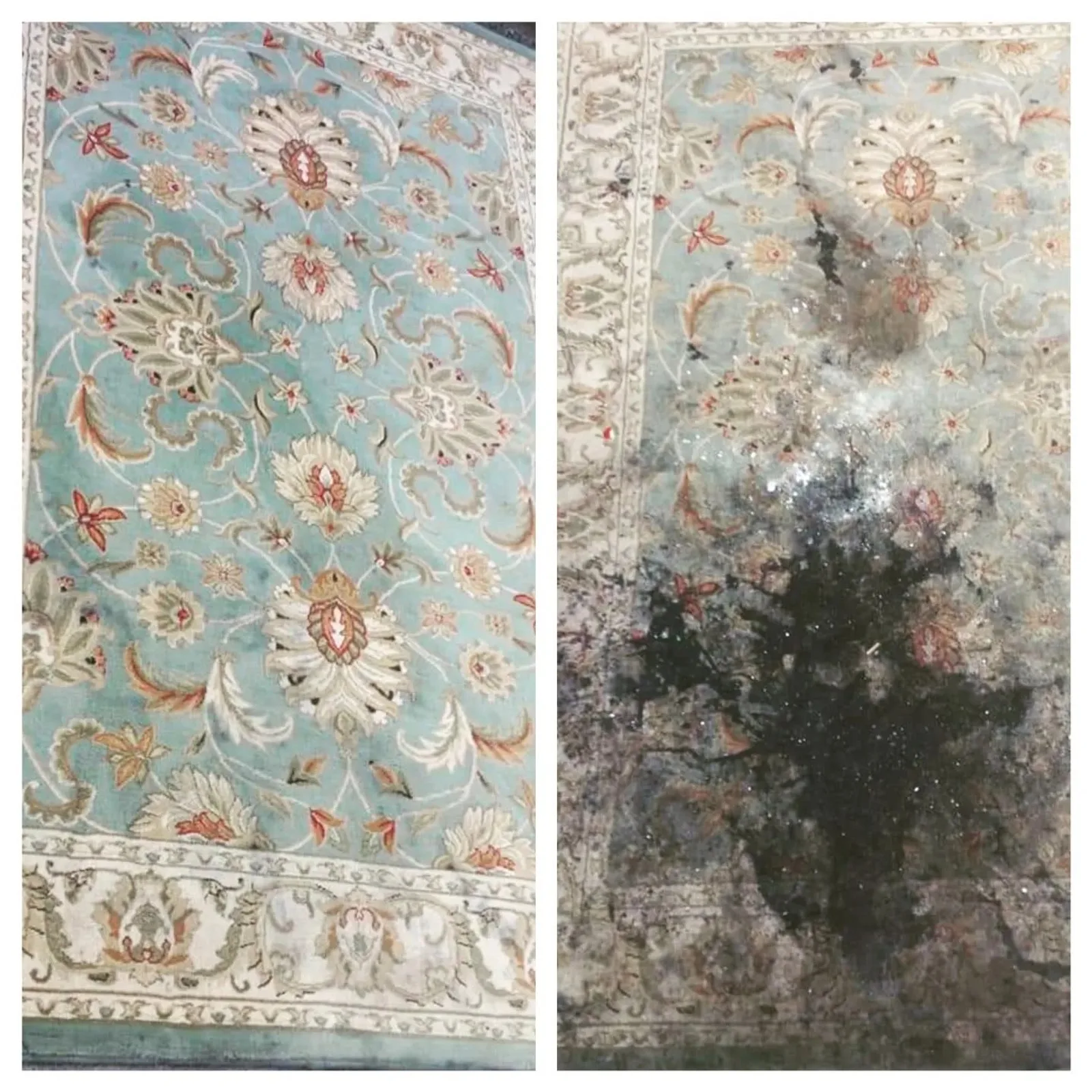
Why fibre matters most
Wool, natural fibre and synthetic rugs behave differently
Wool & natural fibre
Wool, cotton and jute rugs need a gentler approach and more careful drying than synthetic fibres. Over-wetting or the wrong cleaning agent can affect the pile or the dye, so these get treated with more caution.
Synthetic fibre
Nylon and polypropylene rugs are generally more forgiving of moisture and dry faster, which is usually what makes them straightforward to clean in place at home.
Construction
Hand-knotted, flatweave, tufted or machine-made construction all handle handling and cleaning differently — a hand-knotted rug's backing, for instance, needs more careful treatment than a machine-made one.
Dye stability
Some dyes, especially on older or hand-dyed rugs, can bleed or run under water and heat. Testing an inconspicuous area for colourfastness before cleaning the whole piece is a standard, necessary step, not an optional extra.
In place or collected?
How that decision actually gets made
Some rugs are best cleaned exactly where they lie — usually synthetic rugs in good condition, or situations where moving a large rug isn't practical. Others genuinely benefit from being taken away and cleaned properly outside the room, away from surrounding flooring and furniture, particularly wool or natural-fibre rugs that need more careful drying than a room can usually provide. It isn't a fixed rule either way; it comes down to the rug's fibre, size, condition and what suits you, and it's discussed before anything is booked in — see our rug cleaning Dublin page for how we approach that conversation.
Being realistic
Old, valuable or inherited rugs
A rug that's old, hand-knotted or simply one you're not willing to risk deserves an honest conversation before anything is cleaned. We'll always say so upfront if a rug's condition, age or value is genuinely beyond what's appropriate for us to take on — rather than clean it anyway and hope for the best. What we can offer is careful, fibre-appropriate cleaning and straight answers about where that ends.
Stains & odours
Marks and smells on a rug, treated the same honest way
Spills, pet accidents and general soiling on a rug get the same careful, fibre-first approach as any other part of the job — see our stain removal and pet stain and odour removal pages for how we approach specific marks. As with carpet, we won't promise every stain lifts completely; that depends on the stain, how long it's been there, and the rug's fibre.
Get a free quote
Have a rug that needs attention?
Tell us about it and we'll come back with a clear price and an honest recommendation on in-place or collection cleaning.
Related reading
Related advice and services
FAQ
Common questions about rug cleaning
What's the difference between cleaning a rug and cleaning fitted carpet?
Fitted carpet is cleaned wall to wall, in place, as part of a room. A rug is a standalone object that can be cleaned in place or taken away and cleaned properly outside the room — which makes sense depends on the rug's fibre, size and how soiled it is, not the room it happens to sit in. Rugs also vary far more in construction than a fitted carpet does, so each one gets assessed on its own rather than treated like a smaller version of the same job.
How can I tell what my rug is made of?
Some rugs have a manufacturer's label on the back stating the fibre content, which is the most reliable source if it's still there. Beyond that, wool rugs tend to feel warmer and slightly springy underfoot with a natural, slightly uneven pile, while synthetic rugs (nylon, polypropylene) often feel more uniform and can look shinier. If you're not sure, that's fine — tell us what you know when you get in touch and we'll assess it properly before cleaning.
Is it OK to vacuum a rug between professional cleans?
Yes, regular vacuuming is a sensible, low-risk way to keep grit and everyday dust from building up in a rug between cleans — grit worked into the base of a rug acts like sandpaper on the fibres over time, the same way it does in carpet. Use a gentler setting on delicate or fringed rugs, and lift rather than drag a vacuum head across any loose fringing.