
Blog · 20 August 2026
Red wine on carpet: what actually works vs old wives' tales
Everyone has a red wine stain trick — salt, white wine, boiling water, a splash of vodka. Some of them do genuinely nothing. One of them can make the stain worse. Here's what's actually happening chemically when wine hits carpet, and what's worth doing in the first few panicked minutes.
Why red wine is worse than most spills
Red wine gets its colour from anthocyanins, natural pigments extracted from grape skins during fermentation. Wine is also acidic, typically somewhere in the pH 3.3–3.6 range, and in that acidic state the anthocyanin molecules carry a charge that's strongly attracted to carpet fibres — particularly wool and nylon. That attraction is why wine doesn't just sit on top of carpet the way water does; it starts bonding to the fibres almost immediately.
On top of the colour, wine also carries tannins — the same polyphenolic compounds that give red wine its dry, slightly bitter character. Tannins act a bit like a natural mordant, a substance that helps dye bind permanently to a fibre. Between the charged pigment and the tannins helping it stick, red wine has a genuine chemical head start on becoming a set-in stain compared with something like a spilled soft drink.
Myth: salt draws the stain out
This is probably the most repeated piece of red wine advice there is, and it's not accurate. Salt will absorb some of the liquid sitting on the surface, which can make it look like it's "working" in the first minute. But salt is also the substance used in dyeing to help fix colour permanently into fabric — so tipping it onto a fresh wine stain risks helping set the pigment into the carpet rather than lifting it out. Cleaning professionals and consumer researchers who've tested this generally agree: skip the salt.
Myth: white wine cancels out red wine
The idea that pouring white wine on top neutralises the stain is another one that persists mostly because it looks convincing in the moment. Splashing white wine onto a red wine spill genuinely can lighten the visible colour — but that's dilution, not removal. You've spread the same pigment across a wider, wetter area of carpet rather than taken it out, and you've added more liquid on top of a spill that actually needs blotting up, not thinning down. It's a party trick, not a stain-removal method.
Myth: boiling water or a hot hairdryer speeds things up
Heat is the enemy of a fresh wine stain, not a shortcut. Tannin and pigment-based stains — wine, tea, coffee — can be permanently set by heat, which is exactly the outcome you're trying to avoid. Cold or lukewarm water is the right temperature whether you're blotting, rinsing, or diluting a spill. This matches what we say in our general guide to common carpet stains: heat sets these stains rather than lifting them.
What actually helps in the first few minutes
The single biggest factor in whether a red wine stain comes out is speed, not the product you reach for. Blot — don't rub — with a clean, dry cloth or paper towel, working from the outside of the mark inward so you're not spreading it wider. Rubbing pushes the wine deeper into the pile and can damage the fibres on top of the staining. Once you've lifted as much liquid as possible, cold water or plain soda water (club soda) can help dilute what's left and make it easier to blot further, without the risks that come with heat or salt.
A cautious next step: hydrogen peroxide and dish soap
For a stain that's still resisting after blotting and cold water, a mild solution of hydrogen peroxide (the standard 3% solution) mixed with a small amount of clear dish soap is commonly used as a next step, because peroxide is a mild oxidiser that can help break down the pigment while the soap helps lift it from the fibres. It comes with real caveats, though: it's not suitable for wool, silk, or other delicate natural fibres, it should never be used with a coloured dish soap that could itself dye the carpet, and it should always be tested on a hidden patch first — peroxide can lighten some carpet dyes, which is its own kind of damage. If you're at all unsure about your carpet's fibre, this is exactly the point to stop DIY-ing and get it looked at properly instead of risking a bleached patch next to a wine stain.
Once it's already dried in
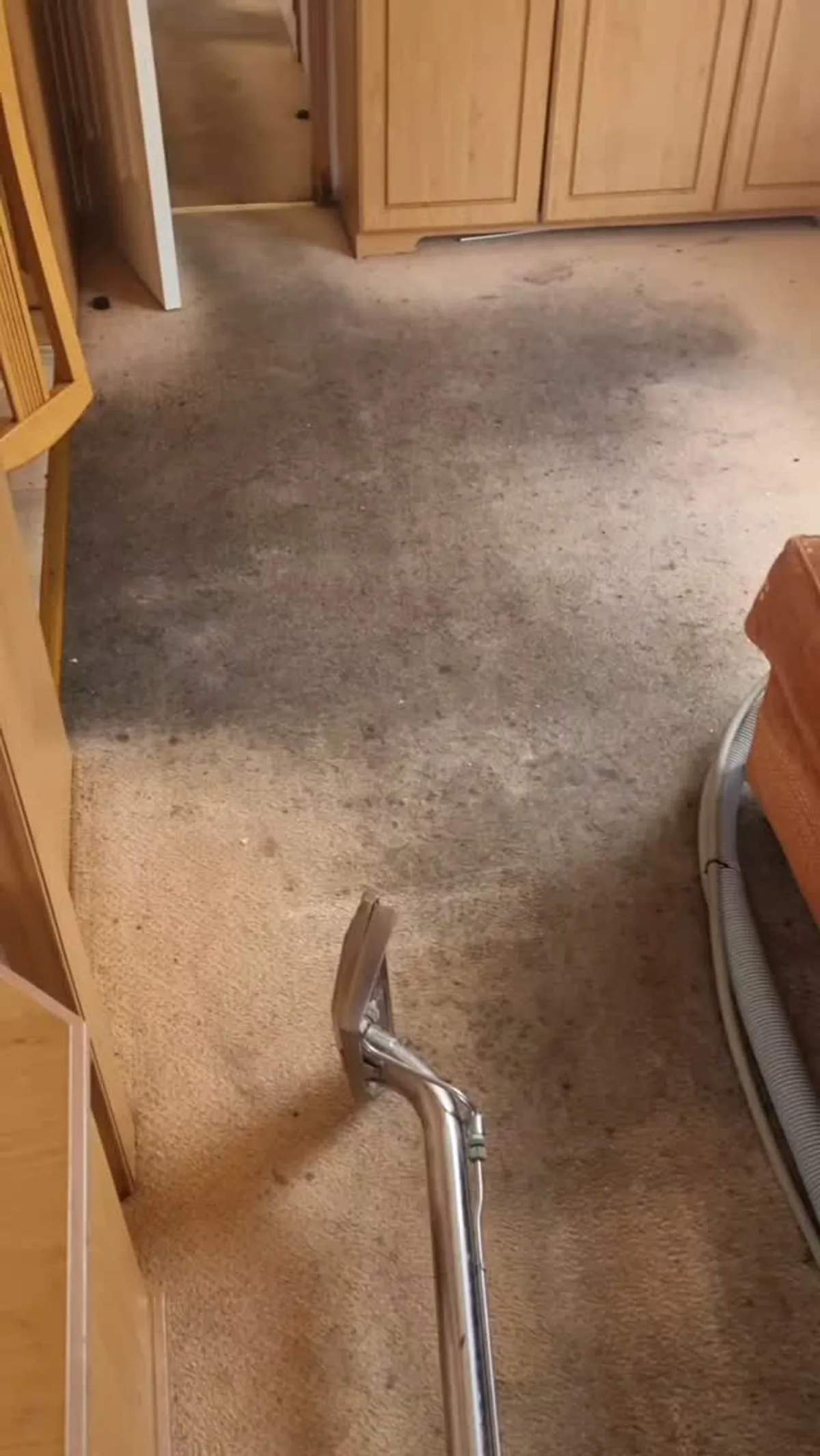
Not every wine stain gets caught in the first few minutes — dinner parties happen, and sometimes nobody notices the spill until the next morning. Once wine has fully dried, the pigment has had time to bond deep into the fibre structure, and household blotting and mild solutions have a much smaller chance of shifting it on their own. That's the point where hot water extraction — the same deep-clean method described in our hot water extraction explained post — genuinely outperforms anything from under the sink, because it can flush the bonded pigment back out rather than just treating the surface.
Whether the spill happened after a dinner party in Adamstown or anywhere else across Dublin, a stain that won't shift with blotting and cold water is exactly what our stain removal service is for. See carpet cleaning prices or get a free quote if it's time to call it in.
FAQ
Common questions about red wine on carpet
Does salt actually help lift a red wine stain?
No, and it can make things worse. Salt does absorb some of the liquid, but salt is also what's used to help set dye into fabric, so sprinkling it onto a wine stain can help fix the pigment into the fibres rather than lift it out. It's one of the most repeated stain-removal myths there is.
Does pouring white wine on a red wine stain remove it?
Not really. White wine can dilute a red wine stain and make it look lighter in the moment, but you're spreading and thinning the spill, not removing the pigment. It also adds more liquid to a carpet that already needs blotting, not more wine poured on top.
Should I use hot water on a red wine stain?
No. Heat can permanently set tannin-based stains like wine, tea and coffee, which is the opposite of what you want on a fresh spill. Cold or lukewarm water is the safer choice, whether you're blotting, rinsing, or diluting the stain.
What if the wine stain has already dried in?
A dried, set-in wine stain is much harder to shift with household products alone, especially once the anthocyanin pigments have bonded deep into the fibres. At that point a professional hot water extraction clean gives you a real chance of lifting it without damaging the carpet — see our common carpet stains guide for more on when DIY reaches its limit.