
Blog · 7 September 2026
What is carpet protector treatment, and is it worth it?
Carpet protector gets offered as an add-on after almost every professional clean, but it's rarely explained beyond "it stops stains." That's not quite what it does. Here's what carpet protector actually is, how it works on the fibre, and when it's genuinely worth applying.
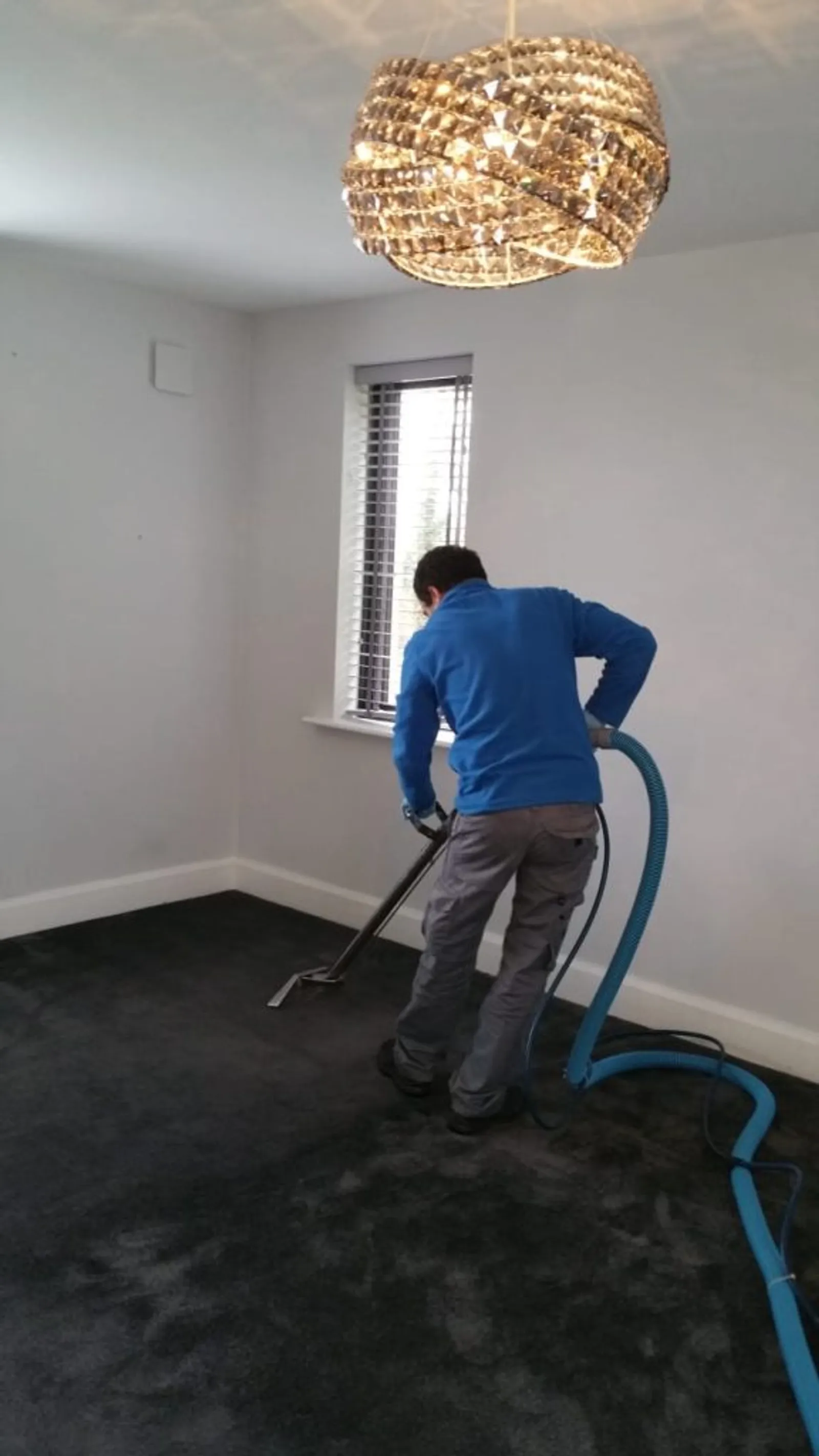
What carpet protector actually is
Carpet protector is a topical treatment sprayed onto the carpet after cleaning, once it's dried. It isn't a sealant and it doesn't sit as a visible film — it's a thin coating applied to individual fibres. Historically this was almost always a fluorochemical, the same broad family of compound behind the original Scotchgard. 3M has since moved away from PFAS-based fluorochemicals entirely, and by its own account eliminated PFAS from Scotchgard's soft-surface products, with current formulas built around acrylic, urethane or siloxane polymers instead. The chemistry has shifted, but the basic goal hasn't: coat the fibre so liquids and soil don't grab onto it as readily.
How it works on the fibre
Untreated carpet fibre — nylon especially — has a surface that liquids and oily soil bond to fairly easily. A protector coating lowers the surface energy of that fibre, which is the property that determines how readily a liquid spreads across and soaks into a surface rather than beading up on top of it. With a fluorochemical treatment specifically, that drop in surface energy is substantial enough that a spilled liquid sits on the fibre as a bead for a short window instead of wicking straight in. That window is the entire point — it's what turns "an instant stain" into "something you can blot up in time," rather than making the carpet immune to staining.
What it does and doesn't do
Protector buys reaction time, it doesn't buy immunity. A drink knocked over and mopped up within a minute or two is far less likely to leave a mark on treated carpet than on bare fibre. A glass of red wine left to soak in overnight, or a strongly pigmented spill like turmeric or curry sauce, can still stain a protected carpet — the coating slows penetration, it doesn't stop pigment from bonding to the fibre indefinitely. It also does nothing for wear, matting, or the kind of gradual dulling that comes from ordinary foot traffic; that's a separate issue from spill resistance. If you're dealing with a stain that's already set, our common carpet stains guide covers what actually works stain by stain.
How long a treatment actually lasts
There's no single fixed answer, because it depends on how much wear the carpet gets rather than on a calendar. A hallway, stairs, or a busy living room area will wear through a protector coating faster than a spare room that's barely used — vacuuming and everyday foot traffic gradually strip it off the fibre over time. That's a normal, expected process rather than a sign the treatment failed or was applied badly.
Why it needs reapplying after a professional clean
This is the detail most people don't expect: a proper deep clean removes a previous protector coating along with the soil it's designed to remove. Hot water extraction injects water and cleaning solution into the fibre and then extracts it back out — and whatever protective coating was sitting on the fibre goes with it. That's not a downside of the cleaning method, it's just what a thorough clean does. It does mean that if a carpet had protector applied a year ago, a professional clean since then will have removed most of it, whether or not the carpet looks like it needs reapplying.
Is it actually worth it?
It depends on the room and the household, more than on the carpet itself. Protector earns its keep fastest in places where spills are more likely to happen — a home with young children or pets, a dining area, a hallway, or stairs that get heavy daily use. A spare room, a formal room that's rarely sat in, or carpet that's due to be replaced soon gets far less practical value from it. Rather than treating a whole house the same way, it's worth thinking room by room about where a spill is actually likely and how much time you'd realistically have to react to one. Homes with pets specifically may also want to weigh it alongside our guide on products that are safe for kids and pets, since not every treatment is suited to every household.
We cover Ballybough and the rest of the city, and can apply protector as part of a professional carpet clean — it's a genuinely quick add-on once the carpet's dried. See our prices page for how it's costed, or get a free quote for your own carpet.
FAQ
Common questions about carpet protector treatment
Does carpet protector stop stains completely?
No — it doesn't make carpet stain-proof. Protector lowers the surface energy of the fibre so liquids bead up instead of soaking in straight away, which buys you time to blot a spill before it sets. Something left to sit, or a stain from a strongly pigmented substance like wine or turmeric, can still mark the carpet even with protector applied.
How long does carpet protector last?
It varies with foot traffic rather than time alone — roughly a few months in a busy hallway or living room versus a year or more in a spare room that barely gets used. Vacuuming, general wear and any cleaning in between all gradually strip it off the fibre, which is normal rather than a sign it was applied badly.
Why does protector need reapplying after a professional clean?
Hot water extraction is designed to strip soil and residue out of the carpet, and it removes most of whatever protective coating was on the fibre along with it. That's expected, not a fault in the clean — it just means any protector needs reapplying afterwards if you want the fibres covered again, rather than assuming it's still there.
Is carpet protector worth it for every home?
It matters most where spills are more likely — households with young kids, pets, or carpet in a hallway, dining area or stairs that gets heavy use. A spare room or a low-traffic area that rarely sees a spill gets far less practical benefit from it, so it's worth thinking about which rooms actually need it rather than treating the whole house the same way.