
The complete guide
Carpet cleaning in Dublin: the complete guide to professional cleaning, costs, stains and what to expect
What we'd want any customer to know before booking a carpet clean in Dublin: what the job actually involves, what it can and can't fix, what drives the price, and how to tell a careful cleaner from a careless one. Written from the jobs we do, illustrated with photos from them.
The short version
- Vacuuming only lifts loose, dry dirt. A professional clean flushes out the fine grit and greasy film that make a carpet look grey, using hot water extraction.
- Most carpets are dry within a few hours to most of a day. In Dublin's damp air, ventilation makes the biggest difference.
- The price depends on the job, not just the number of rooms: size, condition, stairs, furniture and access all change the time involved.
- Most everyday marks improve a lot. Some don't come out fully: old set-in stains, bleach spots, burns and worn fibres. A good cleaner tells you that before starting, not after.
- The quickest way to an accurate price is to send a few phone photos.
What professional carpet cleaning actually involves
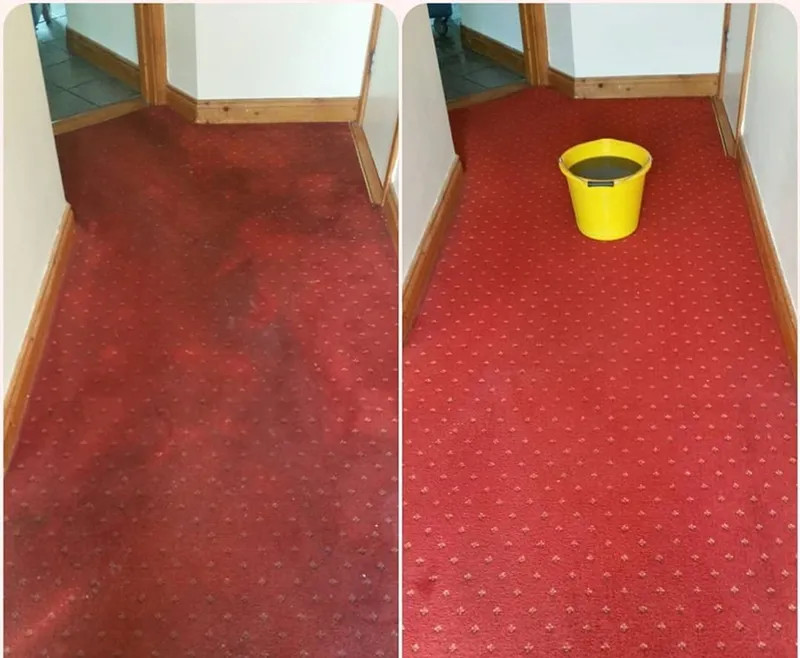
A carpet holds far more dirt than you can see. Vacuuming deals with the loose, dry material on top: crumbs, hair, surface dust. What it can't shift is the fine grit that works down towards the base of the pile, plus the thin greasy film that comes in on shoes and settles out of the air from cooking. That film is what dirt sticks to. It's why a hallway carpet turns grey in a path from the front door even when it's vacuumed every week.
Professional cleaning removes that layer with liquid, not suction alone. We use hot water extraction, which most people call steam cleaning (no actual steam is involved). Warm water and a cleaning solution are sprayed into the pile and pulled straight back out by a powerful vacuum, carrying the loosened soil with them. Done properly, the carpet is left damp rather than wet, which is what keeps drying times reasonable. There's a longer explanation in hot water extraction explained, and a comparison with other methods in steam vs dry carpet cleaning.
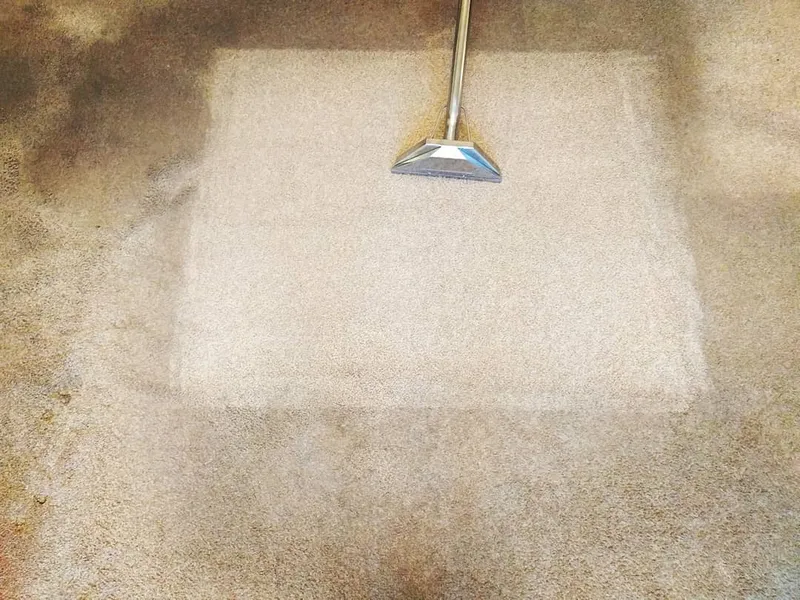
On a real job, the kit is less mysterious than it sounds: a portable extraction machine, a floor wand for open areas, a smaller hand tool for stairs, edges and upholstery, and air movers to speed up drying where they're needed. You can see all of them in the photos throughout this guide. They're from our own jobs, not stock images.
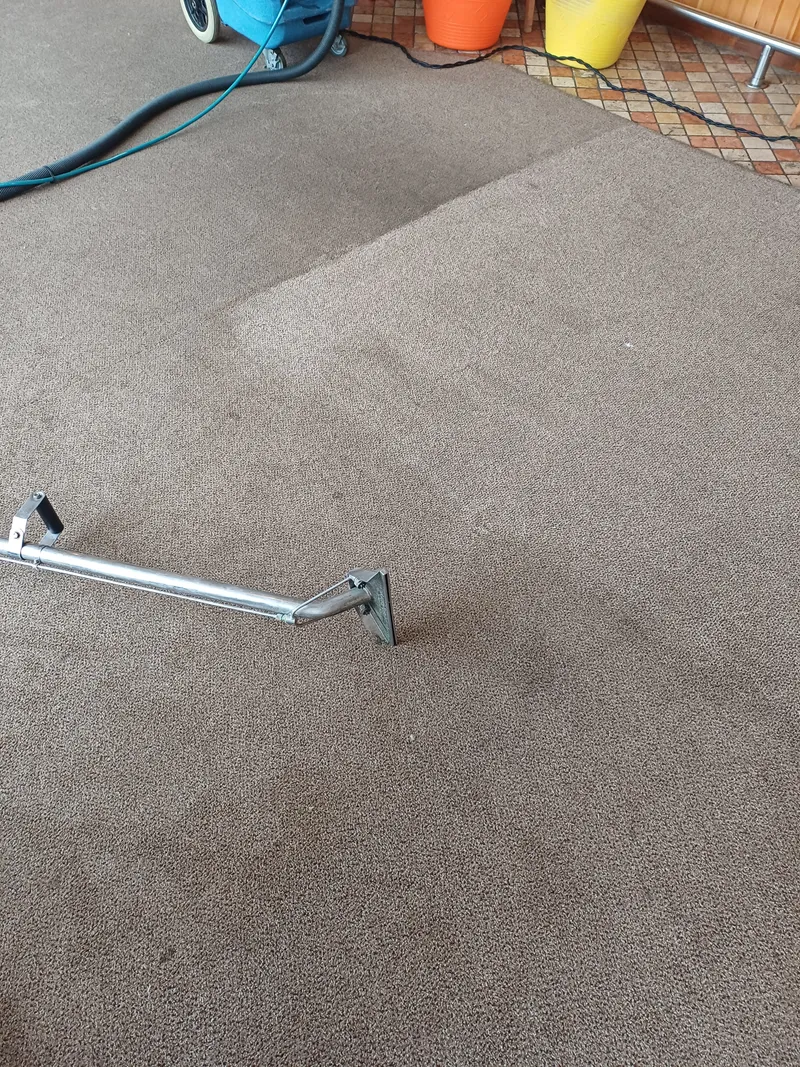
Other methods exist. Low-moisture or "encapsulation" cleaning, for example, is common on commercial carpet tiles where a floor has to be back in use quickly. No single method suits every carpet, so a good cleaner should be able to tell you why they're using theirs on yours.
Why people book a professional clean
In our experience the reasons fall into a handful of groups, and the reason matters because it changes what a good result looks like.
- Grey traffic lanes in hallways, on stairs and in front of sofas. These are partly dirt and partly damage: grit acts like sandpaper on the fibres. Cleaning removes the dirt and usually makes a big visual difference. It can't regrow fibres that have been worn down.
- Moving in or moving out. Tenants preparing for an inspection, landlords turning a property round, buyers who want a fresh start. See our end of tenancy guide for tenants and landlords.
- A specific problem: a spill, a pet accident, a smell that won't go away. These usually need targeted treatment as well as a general clean.
- After building work, when fine plaster and sanding dust has settled deep in the pile.
- Before selling or letting, because clean carpet photographs and shows far better than tired carpet.
- Routine maintenance. Grit removed regularly does less damage over time. Some carpet manufacturers' care guidance also recommends periodic professional cleaning, so check your carpet's paperwork if it's fairly new.
People with allergies often ask whether cleaning helps. Removing built-up dust and debris from a carpet is reasonable housekeeping, and many customers tell us a room feels fresher afterwards. We don't claim that cleaning removes all allergens or bacteria, though. Anyone who promises that is overselling.
Houses, apartments, rentals and offices
Houses
In most Dublin houses the hall, stairs and landing carry the heaviest wear by a distance. They're the first route in from outside and the one everyone uses. Bedrooms are usually lighter work, apart from spills beside the bed and make-up or hair-dye marks near mirrors. In older terraced homes we often find long-fitted wool carpets and stair runners over older underlay. Those are cleaned with less moisture and tested first.
Apartments
Apartment jobs are mostly about logistics. Newer blocks tend to have carpet in the bedrooms only, with timber or tile in the living area. That means less carpet but more steps between the van and the room. Tell us the floor, whether there's a lift, how parking works (visitor spaces, permit streets, underground car parks with height limits) and whether the management company has rules about access times. The machine is portable, so a top-floor flat with no lift is fine. It just takes longer, and it's better planned for than discovered on the day.
Rental properties
For tenants, timing is everything: clean once the property is empty and before the final inspection, with time to dry. For landlords and letting agents, a clean between tenancies plus dated photos of the result is the simplest way to avoid arguments later. The end of tenancy carpet cleaning page covers how we work with each, including confirmation of the work carried out.
Offices and commercial premises
Commercial carpet takes far more footfall than domestic carpet, often concentrated at reception, the corridors and around desks. Planning matters as much as cleaning: which zones, in what order, and how to keep the business running. Our commercial carpet cleaning page and the guide on how often office carpets should be cleaned go into this. Our working hours are Monday to Friday, 8am to 5pm. If you need something outside that, ask, and we'll tell you honestly whether it's possible.
Stains, pets, odours and allergens
Stains are where expectations matter most, so here is the honest overview. Each topic has a full guide if you want the detail.
- Food and drink (coffee, tea, red wine, sauces): best treated fresh. Blot, don't rub, and use cold water rather than hot. Many lift completely when treated properly; older ones often lighten rather than vanish. See the carpet stain removal guide.
- Mud and general soiling: let mud dry, then vacuum. General grey soiling responds very well to a full clean because it's dirt, not dye.
- Pet accidents: urine soaks below the surface, so the stain and the smell are two separate problems. See the pet stain and odour guide.
- Odours come from a source: pets, damp, smoke or spills that reached the underlay. Treating the source works; covering it with fragrance doesn't. For musty smells, see damp smells and mould in carpet.
- Old stains are harder because they've oxidised, been set by heat, or been treated with products that left residue or removed colour. We'll tell you what's realistic after we've looked at them.
What a professional clean usually achieves
Every carpet is different, so treat this table as a realistic guide rather than a promise.
| Problem | What usually happens | What limits the result |
|---|---|---|
| General grey soiling, traffic lanes | Big visual improvement | Fibres already worn down by grit stay worn |
| Recent food and drink spills | Often lift completely | What was used on them beforehand |
| Old coffee, tea or wine marks | Usually lighten a lot; may leave a faint shadow | Age, heat, oxidation, earlier products |
| Recent pet accidents | Stain and smell usually much improved | How far it soaked into the underlay |
| Repeated pet accidents in one spot | Surface improves; smell can return in humid weather | Contaminated underlay or subfloor beneath |
| Mud and outdoor grit | Responds well once dry soil is removed | Clay and peat soils can leave a tint |
| Bleach or colour loss | Can't be cleaned out: the dye has gone | It's damage, not dirt |
| Burns, melted fibres, worn-through patches | Can't be cleaned out | Needs repair or replacement |
Not sure what's realistic for your carpet?
Send a photo of the stain or the room and tell us what happened. We'll give you an honest view before you book anything.
What happens on the day, step by step
- Walk-through and inspection. We look at the fibre, the condition and any existing damage (worn patches, loose seams, colour loss, burns) and point it out before starting. If there are stains, we'll ask what caused them and what's been put on them. That changes how they're treated.
- Agreeing expectations. Before any water goes down, you'll hear what is likely to come out fully, what will probably lighten, and what won't change. This is the single most useful conversation in the whole visit.
- Furniture. We move light furniture such as chairs and small tables where it's safe to. Heavier pieces like wardrobes, beds and sofas are best moved beforehand if you can. Otherwise, tell us when booking and we'll plan around them.
- Pre-treatment. Marks and heavily trafficked areas get a pre-treatment matched to what's on them, and it's given time to work before extraction.
- Extraction. The main clean, in overlapping passes, room by room. Stairs, edges and corners are done with the hand tool because a floor wand can't reach them properly.
- Drying set-up. Where the room, carpet or weather calls for it, air movers go down to keep air flowing across the carpet.
- Aftercare. Before we leave, you'll get a realistic drying estimate and advice on furniture, foot traffic and what to do if a mark reappears as the carpet dries.
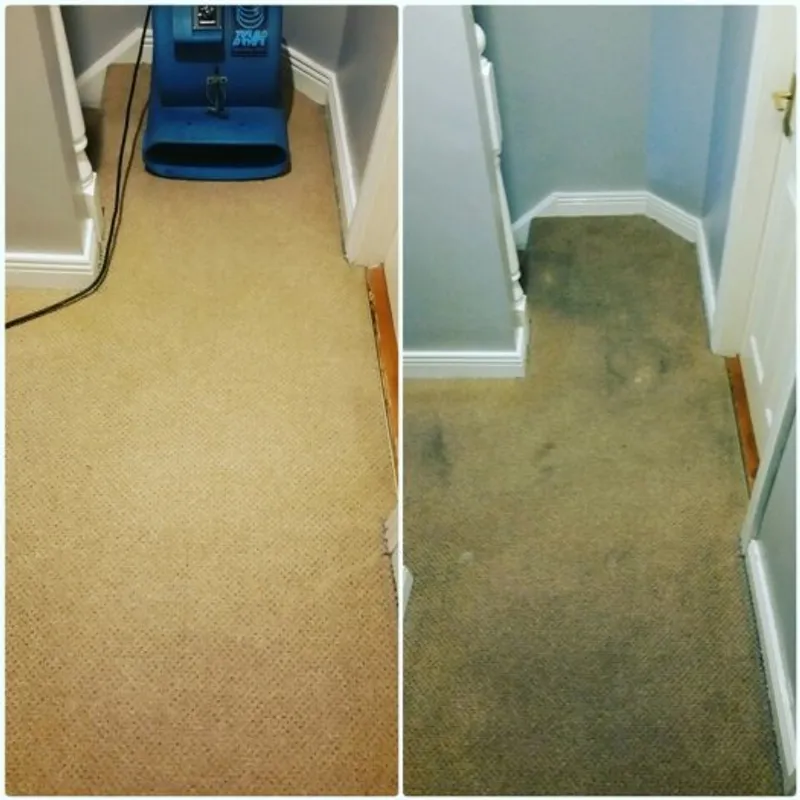
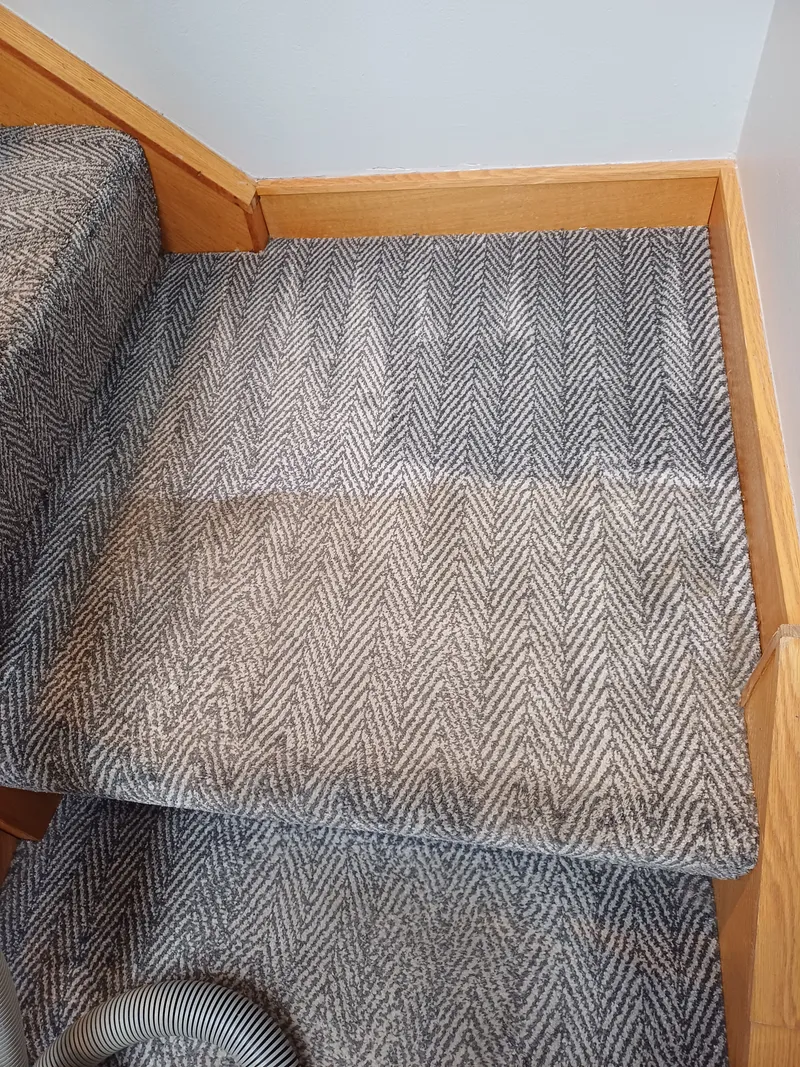
Drying times and aftercare
As a general guide, most carpets are dry within a few hours to most of a day after a professional clean. Thick wool carpet on a still, humid day sits at the slow end. A synthetic carpet in a ventilated room on a breezy day sits at the quick end. Moving air helps most: open windows if it's dry outside, leave internal doors open, and use gentle background heat. Don't aim a heater at one spot.
Two things catch people out. First, putting furniture back on a damp carpet can leave rust or dye marks from the legs. Use foil or plastic pads under the legs until it's dry. Second, some stains wick: residue deep in the pile travels up to the surface as the carpet dries, so a mark that looked gone reappears faintly the next day. That isn't a failed clean. It usually responds to a second treatment, so tell us if it happens. The full detail is in how long carpet takes to dry.
What affects the price
No honest company can give you a reliable price for "a three-bed house" without knowing more. Three-bed houses vary hugely in how much carpet they have, what condition it's in and what's standing on it. The things that change the time involved, and therefore the price, are:
- the number of rooms and how big they are (a box room and an open-plan living room are not the same "one room")
- the condition: light, moderate or heavy soiling, plus specific stains, pet accidents or odours
- stairs, landings and hallways, which are counted and cleaned differently from flat rooms
- furniture that has to be moved, or worked around
- access and parking, especially for apartments and city-centre streets
- anything else cleaned in the same visit, such as a sofa, mattress or rug
The full breakdown, and a checklist for comparing quotes from different companies, is in our guide to carpet cleaning costs in Dublin.
Preparing your home
A little preparation makes the clean quicker and the result better:
- Clear small items off the floor: toys, shoes, bins, plants, anything under the beds.
- Give the carpets a thorough vacuum if you can. Removing loose grit first helps the clean go deeper.
- Move fragile or valuable pieces yourself, and tell us in advance about anything heavy that needs moving.
- Make a note of any stains: what they are, roughly how old, and what's been used on them.
- Plan for pets and children to stay out of the rooms while we work and while the carpet dries.
- For apartments, sort out parking and building access before the day.
There's a full, printable version in our carpet cleaning preparation checklist.
How to choose a carpet cleaner in Dublin
Carpet cleaning is easy to start and hard to do consistently well, so the range of quality is wide. Before booking anyone, including us, these questions are worth asking:
| Ask this | Why it matters |
|---|---|
| What method will you use on my carpet, and why? | A good answer refers to your carpet's fibre and condition, not one routine for every job. |
| Is that a total price for the job I described, or a "from" price? | Headline per-room prices often exclude stairs, pre-treatment or furniture moving. |
| What happens if the job is different on the day? | Any change should be discussed and agreed before extra work starts, not added to the bill afterwards. |
| Will you tell me honestly which stains won't come out? | Nobody can guarantee every stain. A cleaner who promises that hasn't looked closely. |
| How long will it take to dry? | A clear, realistic answer, and air movers where needed, avoids a carpet left wet for days. |
| Can I see photos of similar jobs? | Real before-and-after photos are better evidence than adjectives. Here are ours. |
| Are you insured, and who will actually do the work? | A reasonable thing to confirm with any trade coming into your home. |
A few warning signs to watch for: a very low headline price followed by a list of extras on the day, a promise that "every stain will come out" before anyone has looked, no questions about your carpet at all, and reluctance to give a total before starting.
When replacing makes more sense than cleaning
Sometimes the honest advice is not to spend money on a clean. Cleaning won't fix:
- pile that has worn through to the backing, or traffic lanes where the fibres are flattened and frayed
- a smell from urine that has soaked the underlay and floorboards over months or years (the underlay may need replacing under the carpet)
- large areas of bleach or colour loss
- backing that is breaking up, or carpet that has come away from the gripper and rippled badly
- carpet soaked by a flood or a burst pipe. That's a water-damage job, not a cleaning job, and it should be assessed quickly.
If you're on the fence, see does my carpet need replacing, or just cleaning? We'd rather tell you a carpet is past saving than take money for a clean that won't satisfy you.
Things that are specific to Dublin
The weather
Dublin air is damp for much of the year, so carpets dry more slowly here than in drier climates, especially in winter with windows shut. Ventilation and gentle heating after a clean matter more than people expect. Winter also means mud, wet footpaths and grit coming in the front door, which is why hallway carpets take the worst of it.
Housing stock
The city's carpets reflect its housing. Victorian and Edwardian terraces in areas like Rathmines, Ranelagh and Phibsborough often have stair runners and older fitted carpets that need a gentler, lower-moisture approach. The mid-century semis of Crumlin, Drimnagh and Cabra put most of their wear on the hall, stairs and landing. Newer apartments and estates in places like Adamstown, Clongriffin and Citywest mostly have synthetic carpet in the bedrooms. It's usually quicker to clean, but access and parking take more planning.
Coast and mountains
Homes near the sea, from Clontarf and Sandymount out to Malahide and Skerries, get fine sand walked in, which grinds at the base of the pile. Homes towards the Dublin Mountains, such as Tallaght, Rathfarnham and the foothill areas, deal with mud and peaty soil. Sand needs thorough vacuuming before a clean. Peat and clay can leave a tint that takes extra treatment.
Rentals and access
Dublin's rental turnover is high, particularly around the canals and the colleges. That makes move-out cleans a big part of the work. Narrow terraces with on-street permit parking, apartment blocks with fobs and management rules, and city-centre loading restrictions are all routine for us, but they need planning. Mentioning them when you ask for a quote saves a delay on the day. You can find your area on our areas we cover page. We work across Dublin city and county, plus Kildare and Wicklow.
Ready to book, or want a price first?
Our carpet cleaning service in Dublin covers homes, rentals and offices across the city and county. Send photos for a quote, WhatsApp us, or call during working hours (Monday to Friday, 8am to 5pm).
FAQ
Questions we get asked about carpet cleaning
Is professional carpet cleaning worth it compared with hiring a machine?
For a light refresh, a rental machine can be fine. The difference is mostly in extraction: rental machines tend to put in more water than they recover, so carpets stay wet longer and residue is left behind to attract dirt. Professional equipment recovers far more of the water and the soil with it. There's a full comparison in our professional vs DIY guide.
How long does a carpet clean take?
It depends mainly on how much carpet there is, its condition, and how much furniture and how many stairs are involved. A single room is a short visit; a full house with stairs and landing takes considerably longer. We'll tell you roughly how long to expect when we quote, so you can plan your day.
Can you clean carpets in an apartment with no lift?
Yes. The extraction machine is portable, so upper floors are no problem. It just takes a little longer to bring everything up. Tell us which floor you're on and how parking works when you book so we can plan for it.
Do you need access to water and electricity?
Yes. Portable extraction machines run off a normal socket and are filled from a tap, so we'll need access to both. If either could be a problem, for example in an empty rental with the power off, mention it when booking.
Will my carpet get dirty faster after it has been cleaned?
It shouldn't. Fast re-soiling usually happens when cleaning products are left in the carpet, because sticky residue attracts dirt. That's common after DIY shampooing. Extraction rinses the solution back out, which is why it's the method we use.
How often should carpets be professionally cleaned?
It depends on footfall, pets, children and how light the carpet is. Busy family homes and pet owners benefit from more frequent cleans than a quiet home. Our guide to how often to clean carpets gives a realistic schedule.
Is carpet cleaning safe for children and pets?
We'll tell you when the room is fine to use again. The main practical rule is to keep children and pets off the carpet until it's dry. There's more detail in our guide to cleaning products, children and pets.
Can you clean a sofa, mattress or rug in the same visit?
Yes. We also clean sofas and upholstery, mattresses and rugs. Mention everything when you ask for a quote and we'll price it as one visit.